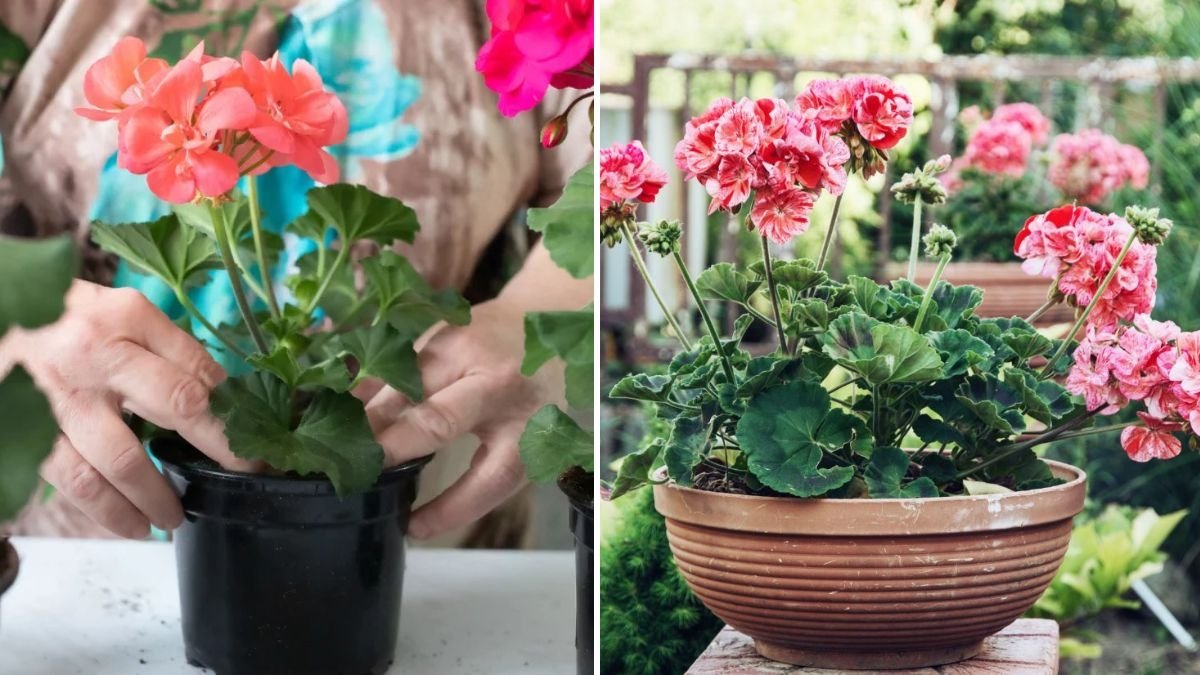
Geraniums are one of the most loved flowering plants around the world—not only because they look stunning, but also because they are extremely easy to grow, low-maintenance, and perfect for both indoor and outdoor gardening. Whether placed on a balcony, windowsill, garden bed, or hanging pot, geraniums add a splash of vibrant color that instantly transforms any space.
If you’ve been searching for a plant that blooms abundantly, doesn’t demand too much care, and looks gorgeous throughout most of the year, then geraniums are a perfect choice. In this complete guide, you’ll learn everything you need to know—from planting and soil preparation to watering, pruning, and pest control—to successfully grow geraniums at home.
Why Grow Geraniums?
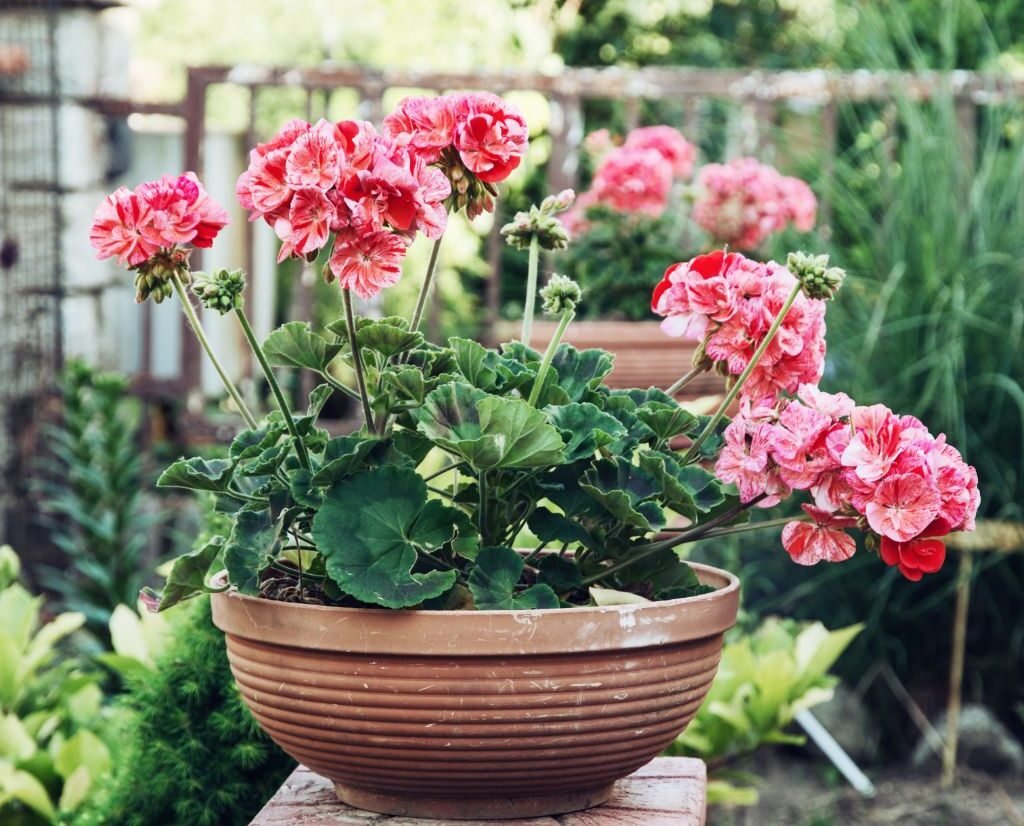
Before diving into the growing process, it’s helpful to know why geraniums are so popular among gardeners:
- They bloom for a long duration—from spring to late fall.
- Suitable for beginners, as they don’t require constant attention.
- Great air purifiers, improving indoor air quality.
- Available in many colors like red, pink, white, purple, and salmon.
With proper care, geraniums can bloom year after year, making them a rewarding plant for any home gardener.
Best Location to Grow Geraniums
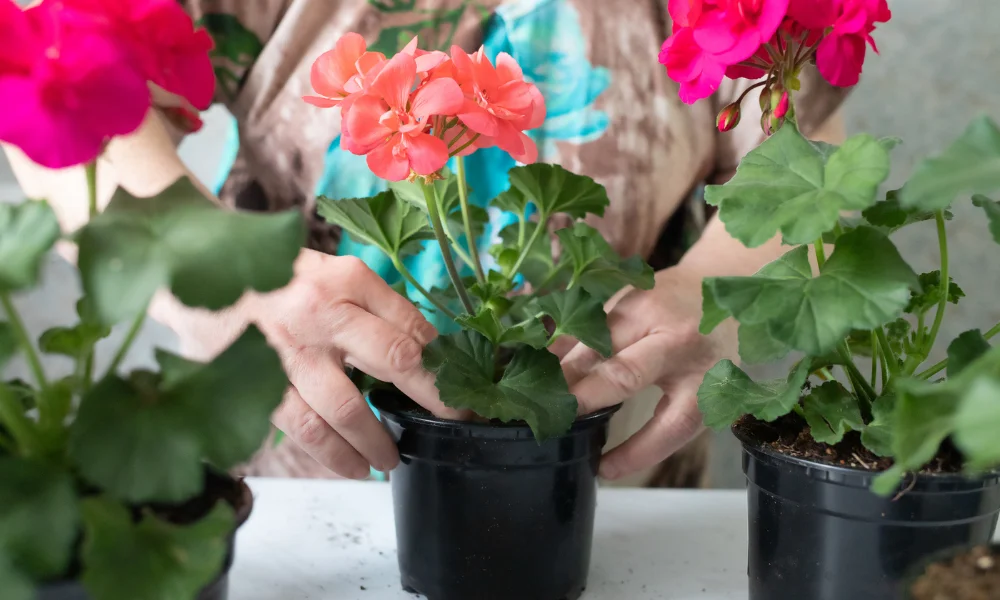
Geraniums love sunlight. For best growth and flowering, ensure they receive:
- 4–6 hours of direct sunlight daily
- Partial shade in extremely hot regions
If growing indoors, place the pot near a south or west-facing window where the plant gets maximum light. Without enough sunlight, geraniums may grow lanky and produce fewer flowers.

Ideal Climate and Temperature
Geraniums prefer warm weather. They grow best between:
- 18°C – 27°C during the day
- 10°C – 18°C at night
They do not tolerate frost. If you live in a colder region, bring your geraniums indoors before winter.
Best Soil for Geraniums
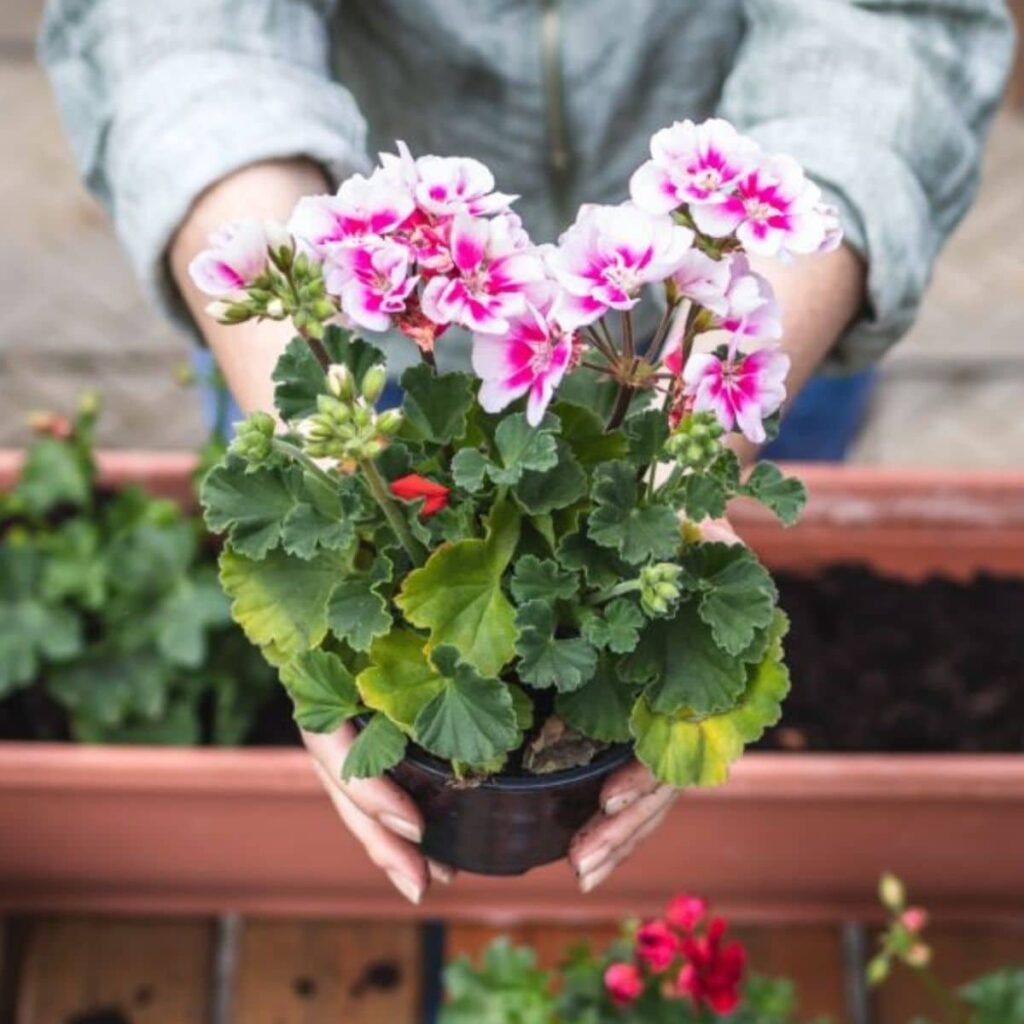
The key to healthy geranium growth lies in the soil. Geraniums thrive in well-draining soil.
Recommended Soil Mix:
- 40% garden soil
- 30% cocopeat or peat moss
- 20% compost (vermicompost or cow manure)
- 10% sand or perlite
The soil should be airy so excess water can drain easily. Good drainage prevents root rot, a common geranium problem.
Planting Geraniums: Seeds vs Cuttings
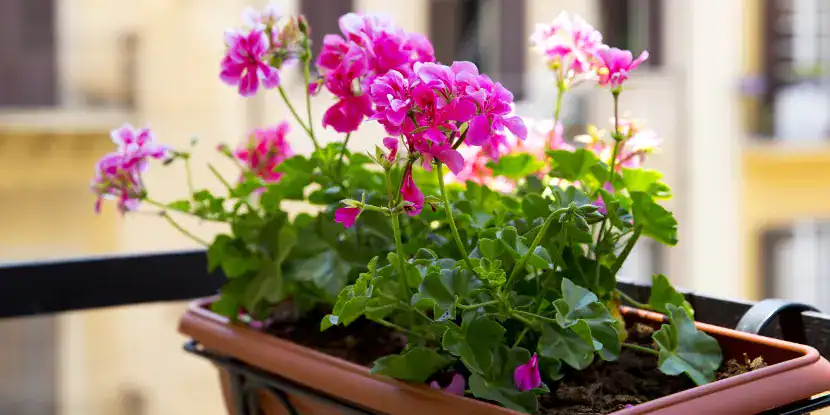
You can grow geraniums from:

- Seeds
- Stem cuttings
Growing from Cuttings (Recommended):
- Faster growth
- Identical to parent plant
- Higher success rate
To grow from cuttings:
- Cut a 4–6 inch healthy stem below a leaf node.
- Remove lower leaves and dip the cut end in rooting hormone (optional).
- Plant the cutting in moist potting mix.
- Keep in indirect light until new growth appears.
Watering Rules for Geraniums
Geraniums dislike overwatering. The best rule is:
Water only when the top 2 inches of soil feel dry.
- Water less in winter.
- Avoid watering leaves to prevent fungal problems.
- Ensure proper drainage holes in pots.
Signs of overwatering:
- Yellow limp leaves
- Mushy stems
- Foul smell from soil
Signs of underwatering:

- Dry crunchy leaves
- Drooping stems
Fertilizer Requirements
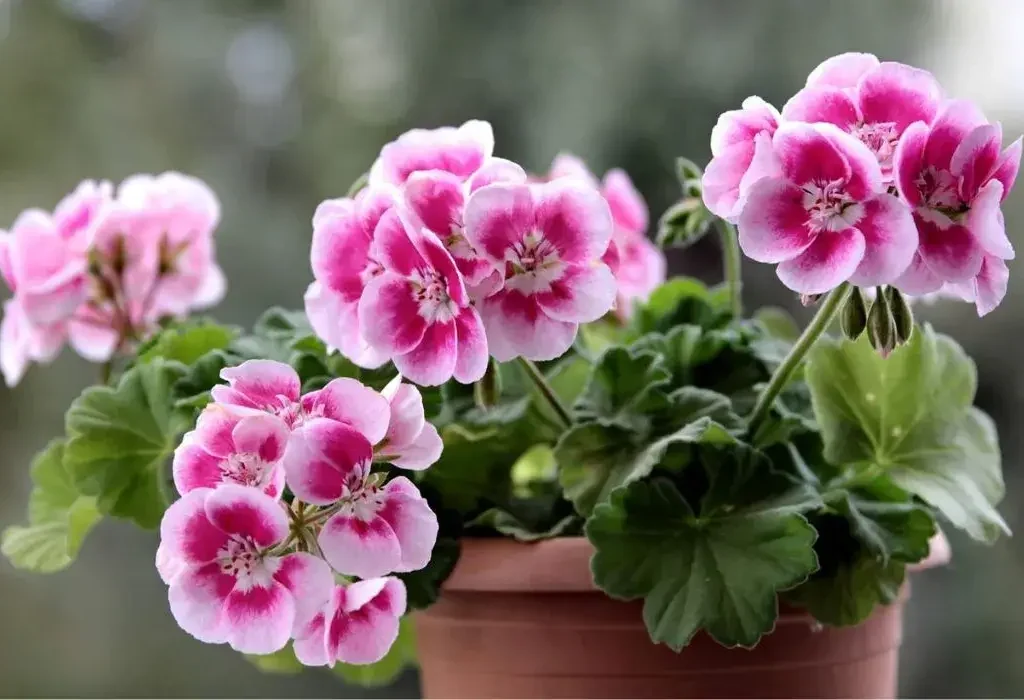
Geraniums respond very well to feeding. Use:
- Liquid fertilizer every 2–3 weeks during active growth.
- Balanced 10-10-10 or 5-10-5 fertilizers work well.
- A fertilizer high in phosphorus helps boost blooms.
Avoid excessive nitrogen—it will grow more leaves but fewer flowers.
Pruning and Pinching for More Flowers
Pruning is essential for dense and bushy growth.
- Pinch off growing tips when the plant is young.
- Remove dry or faded flowers to encourage new blooms.
- Trim leggy branches to maintain shape.
Regular pruning encourages fresh growth and promotes heavier blooming.
Pests and Diseases
Geraniums are generally hardy, but you may find:
| Problem | Cause | Solution |
|---|---|---|
| Yellow leaves | Overwatering | Reduce watering |
| White powder | Fungus | Spray neem oil |
| Holes in leaves | Caterpillars | Hand remove or organic pesticide |
| Sticky leaves | Aphids/mealybugs | Soap water spray or neem oil |
Spraying neem oil every 15 days prevents most infections.

Repotting Geraniums
Geraniums need repotting when:
- Roots come out of drainage holes
- Soil becomes compacted
- Growth slows
Repot every 12–18 months, preferably in spring. Move the plant to a pot that is only 1–2 inches larger, not too big.
Overwintering Geraniums
If you live in a cold climate:
- Bring the plant indoors before frost.
- Reduce watering.
- Keep it in bright, indirect sunlight.
- Prune lightly and wait for spring growth.
This helps them survive winter and bloom again next season.
Propagation for More Plants
Each healthy plant can give you many cuttings. Rooting them ensures you never need to buy new plants again—your garden expands naturally!
Tips for Maximum Flowering
- Give full sun exposure.
- Use well-draining soil.
- Avoid overwatering.
- Fertilize regularly.
- Remove dead flowers (deadheading).
- Prune during early spring.
Following these steps guarantees abundant blooms.

Conclusion
Growing geraniums at home is a simple, rewarding, and enjoyable experience. Whether you’re a beginner or an experienced gardener, geraniums offer beautiful year-round color with minimal effort. With proper sunlight, watering, and basic care, your geraniums will thrive and continue to brighten your home for years.
So go ahead—plant a few geraniums today and enjoy a cheerful, colorful garden full of fragrance, beauty, and life!

Leave A Comment