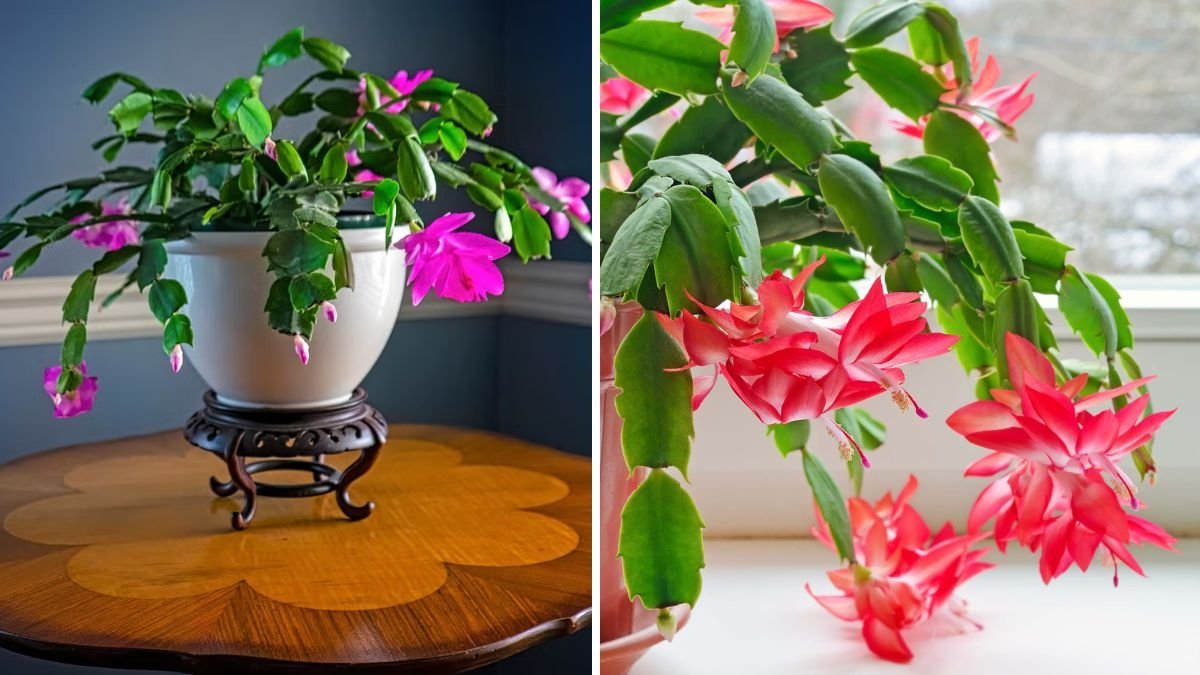
The Christmas cactus (Schlumbergera spp.) is a stunning and festive succulent, cherished for its vibrant blooms during the holiday season. Unlike desert cacti, Christmas cacti thrive in humid, tropical conditions and require a slightly different approach to care. With the right environment, watering, and feeding practices, you can enjoy spectacular flowers year after year. This guide provides all the care tips you need to grow a healthy and blooming Christmas cactus.
Why Christmas Cactus is Special
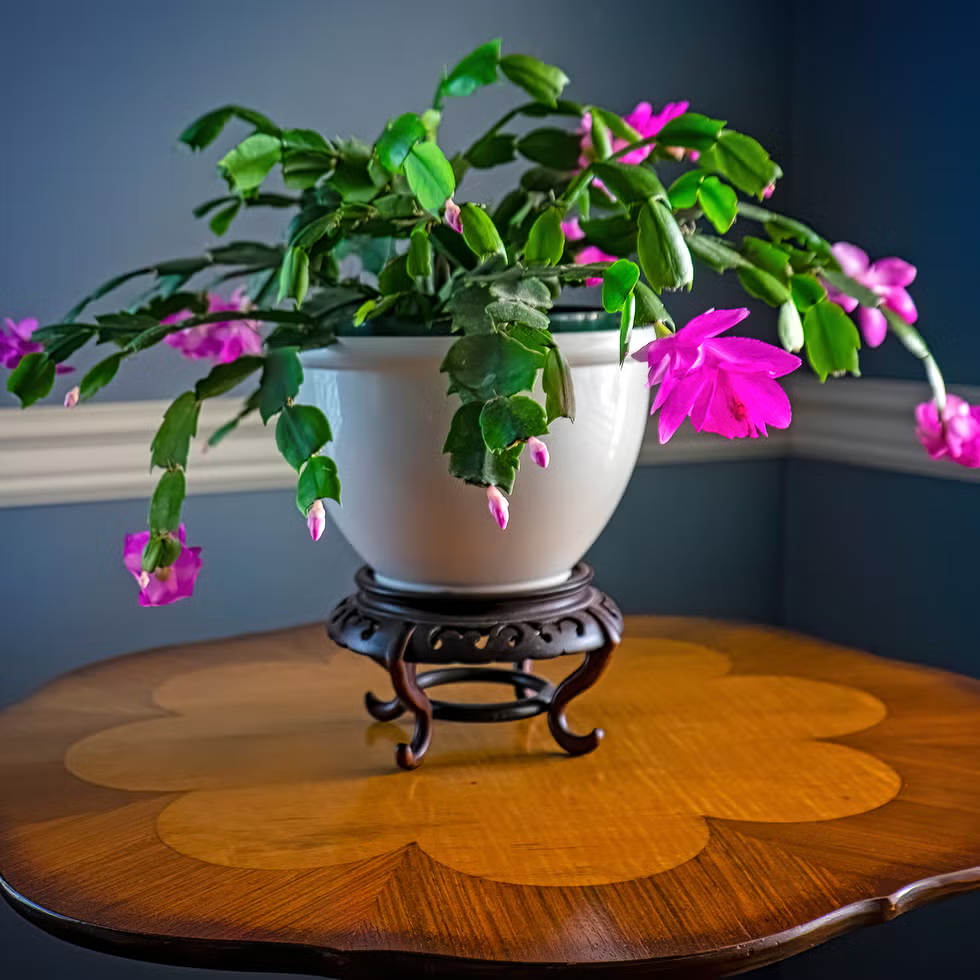
The Christmas cactus is unique in several ways:
- Seasonal Blooms: True to its name, it typically flowers during the winter holidays, providing bright pink, red, or white blooms.
- Epiphytic Nature: Unlike desert cacti, it grows in trees in its natural habitat, which means it prefers indirect light and well-draining soil.
- Long Lifespan: With proper care, a Christmas cactus can live for decades and be passed down through generations.
Its beauty and low-maintenance nature make it a popular indoor plant and a meaningful holiday gift.
Choosing the Right Christmas Cactus
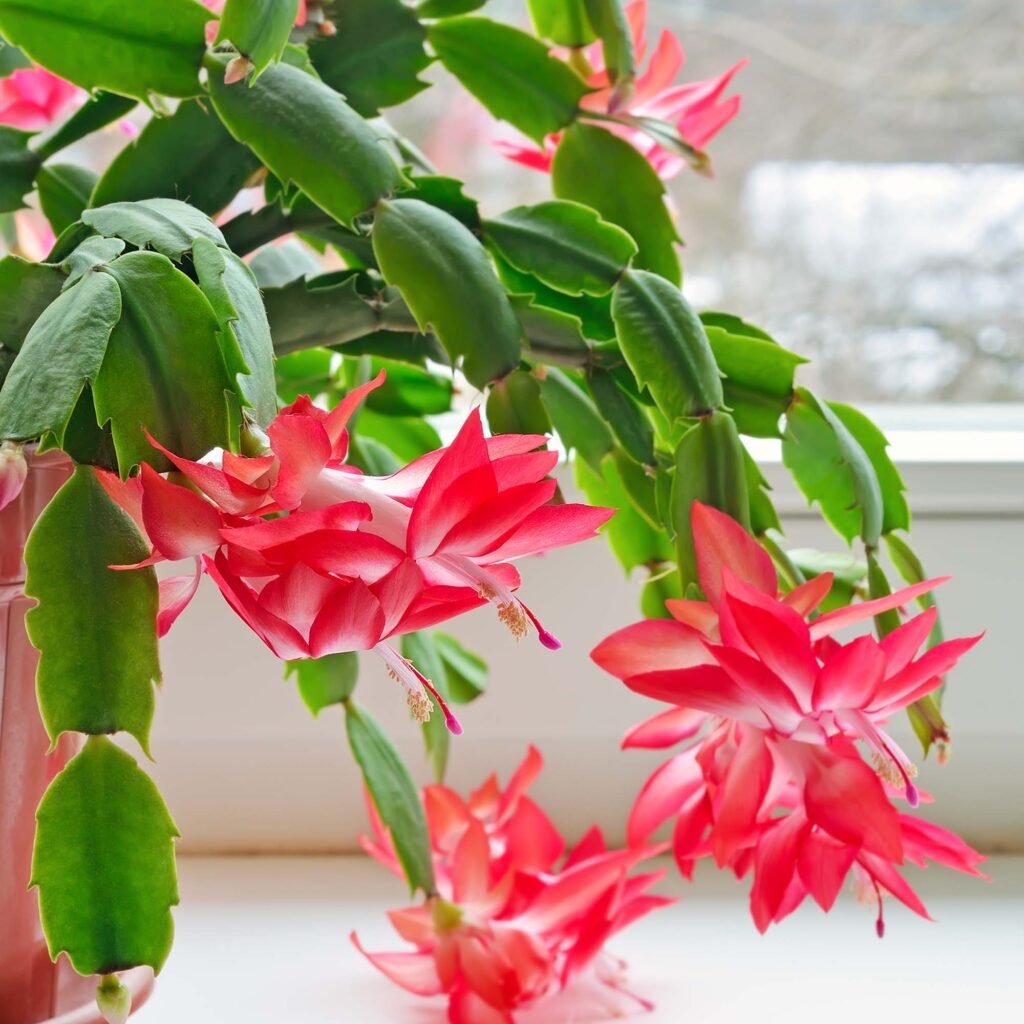
There are several types of Christmas cacti:
- Schlumbergera truncata: The classic Christmas cactus with pointed, saw-tooth leaves. Blooms in late November or December.
- Schlumbergera bridgesii: Known for smoother leaves and large, colorful flowers. Often blooms in early winter.
- Schlumbergera × buckleyi (Thanksgiving cactus): Blooms slightly earlier, around late November.
When selecting a plant, look for healthy foliage, vibrant leaves without spots, and strong root systems. Avoid plants with yellowing leaves or signs of disease.

Planting and Soil Requirements
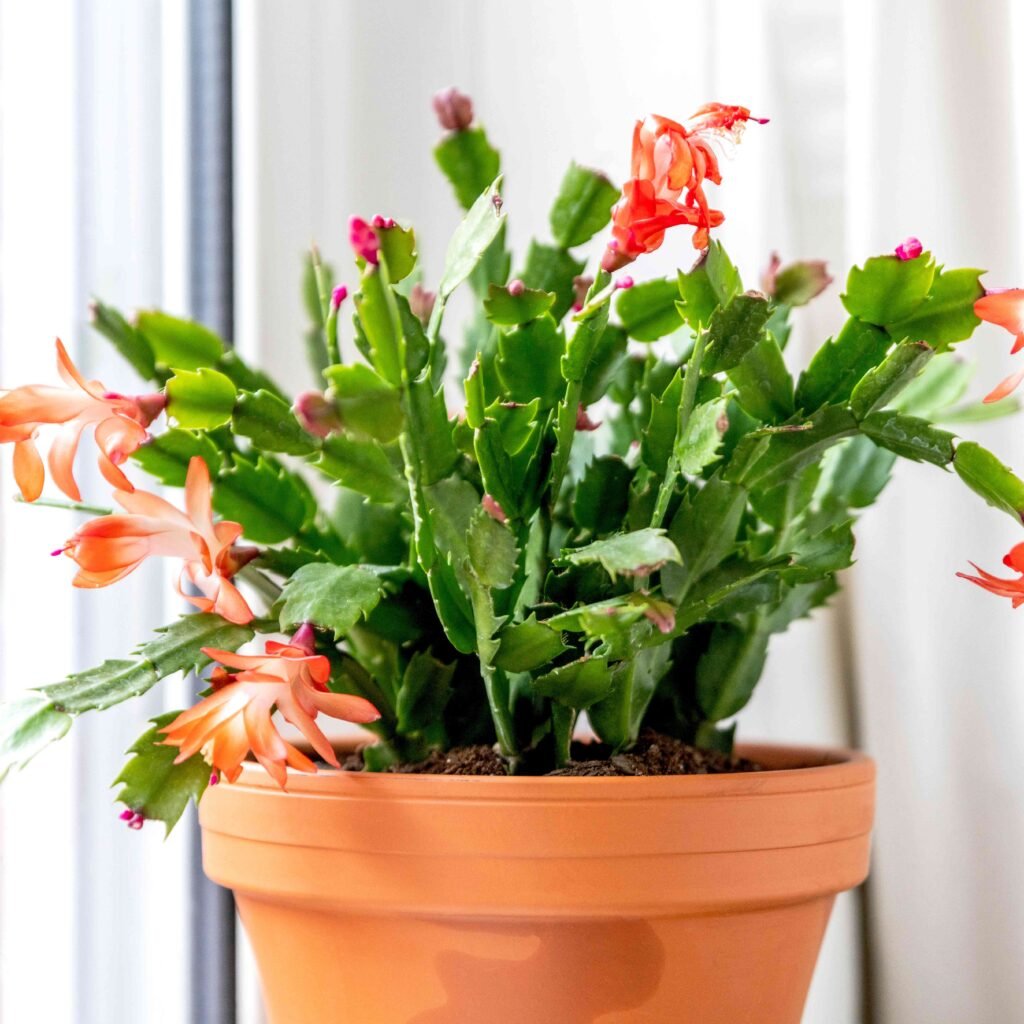
Christmas cacti prefer soil that mimics their natural epiphytic environment.
Steps for Proper Planting:
- Use well-draining soil: A mix of cactus soil, peat moss, and perlite works best. Avoid garden soil as it can retain too much moisture.
- Choose the right pot: Use a pot with drainage holes. Terracotta or ceramic pots are ideal as they allow airflow and prevent root rot.
- Repotting: Christmas cacti benefit from repotting every 2–3 years to refresh the soil and provide room for root growth.
Light Requirements
Unlike desert cacti, Christmas cacti prefer indirect, bright light.
- Indoor Placement: Place near an east-facing or north-facing window for filtered sunlight.
- Avoid Direct Sunlight: Harsh sunlight can burn leaves and cause fading.
- Rotate the Plant: Rotate the plant occasionally to ensure even growth.
Proper lighting encourages healthy foliage and abundant flowering.
Watering Guidelines
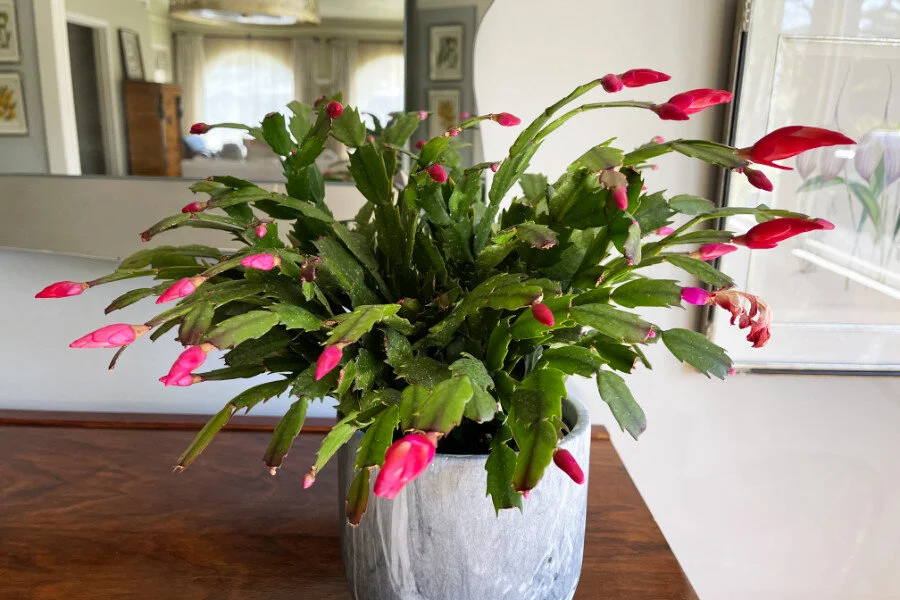
Watering is crucial for Christmas cactus care. Both overwatering and underwatering can stress the plant.

- Water Moderately: Allow the top inch of soil to dry before watering again.
- Reduce Watering in Fall: About 6–8 weeks before blooming, slightly reduce watering to encourage flower bud formation.
- Use Room Temperature Water: Avoid cold water, which can shock the roots.
- Humidity Matters: Christmas cacti prefer 50–60% humidity. Mist occasionally or place a humidity tray nearby.
Temperature Requirements
Temperature affects both growth and blooming:
- Ideal Range: 60–70°F (15–21°C) during the day, slightly cooler at night.
- Flower Induction: Cooler night temperatures (50–55°F / 10–13°C) for 6–8 weeks help trigger flowering.
- Avoid Heat Stress: Keep away from heaters or cold drafts, which can damage buds and leaves.
Fertilization
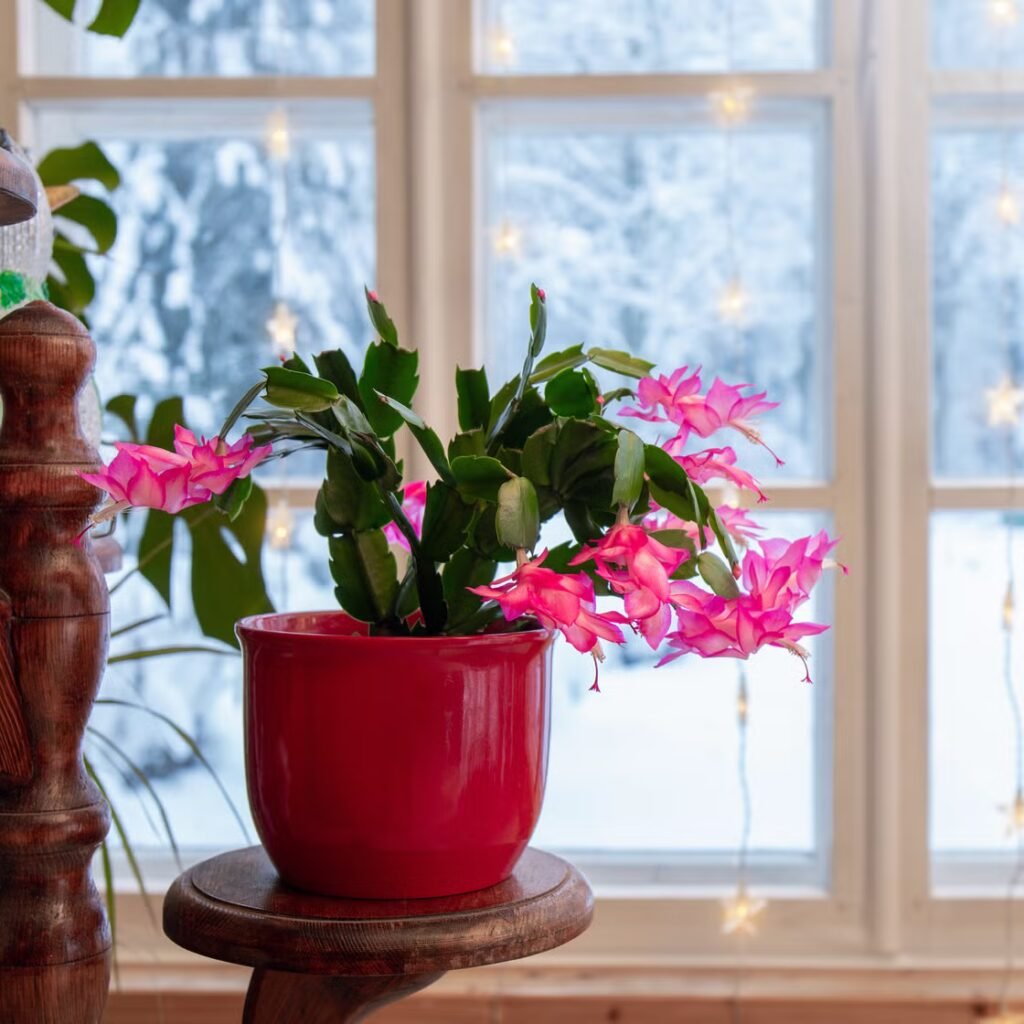
A balanced feeding schedule ensures healthy growth and blooms.
- Use a Cactus Fertilizer: Low in nitrogen and high in phosphorus encourages flowering.
- Feed Monthly: During spring and summer, feed every 4 weeks. Reduce fertilization during fall and winter to allow natural blooming cycles.
- Avoid Over-Fertilizing: Too much nitrogen causes lush foliage at the expense of flowers.
Pruning and Maintenance
Pruning helps maintain shape and encourages branching, leading to more blooms.
Steps for Pruning:
- Trim sections of the stems after flowering ends.
- Leave at least 2–3 segments per stem for healthy regrowth.
- Use sterilized scissors or pruners to avoid infection.
Regular pruning also removes damaged or dead leaves, keeping the plant tidy and healthy.

Propagation Techniques
Christmas cacti are easy to propagate from stem cuttings:
Steps for Propagation:
- Take a 2–3 segment cutting from a healthy parent plant.
- Allow the cutting to dry for 24 hours to form a callus.
- Plant in a moist, well-draining soil mix.
- Keep in bright, indirect light and water sparingly.
- Roots develop in 2–3 weeks, and new growth will appear within a month.
Propagation is a simple way to expand your collection or share plants with friends.
Encouraging Blooms
Flowering is the most rewarding aspect of Christmas cactus care. To maximize blooms:
- Follow a Light-Dark Cycle: Reduce light to 12–14 hours of darkness per day for 6–8 weeks before bloom season.
- Maintain Cool Nights: Nighttime temperatures of 50–55°F (10–13°C) help initiate flower buds.
- Avoid Stress: Do not move or disturb the plant when buds are forming; sudden changes can cause bud drop.
Common Problems and Solutions
Even with care, Christmas cacti can encounter issues:

- Bud Drop: Caused by sudden changes in temperature, light, or watering. Solution: Keep conditions consistent.
- Yellowing Leaves: Often a sign of overwatering or poor drainage. Solution: Reduce water and check soil.
- Pests: Mealybugs and spider mites may appear. Solution: Remove manually or treat with neem oil.
- No Flowers: Often due to insufficient darkness or high nitrogen fertilization. Solution: Adjust light exposure and feeding schedule.
Seasonal Care Updates
Spring and Summer: Focus on growth. Water moderately, provide bright indirect sunlight, and fertilize monthly.
Fall: Reduce watering slightly and provide longer nights (12–14 hours darkness) to induce flower buds.
Winter (Bloom Season): Maintain cooler night temperatures, water sparingly, and enjoy the vibrant flowers. Avoid moving the plant, as stress may cause buds to drop.
Post-Bloom: After flowering, prune lightly and resume normal watering and fertilization to prepare for the next season.
Indoor Display Tips
Christmas cacti make beautiful indoor plants and holiday décor:

- Place on a windowsill with indirect sunlight.
- Rotate periodically for even growth.
- Use decorative pots that complement home décor.
- Combine with other seasonal plants for a festive indoor garden.
Conclusion
Growing a Christmas cactus is a rewarding experience that combines the beauty of flowers with the charm of a low-maintenance succulent. By understanding its unique needs—proper soil, moderate watering, indirect light, controlled temperatures, and occasional pruning—you can enjoy vibrant blooms year after year.
With patience and consistent care, your Christmas cactus can become a treasured plant that graces your home every holiday season. Whether for gifting or personal enjoyment, this plant’s colorful flowers and lush foliage are a true celebration of nature’s beauty.
By following this complete care guide, you’re now equipped to grow and maintain a healthy, blooming Christmas cactus like a seasoned gardener.

Leave A Comment