
Eggplant, also known as brinjal or aubergine, is one of the most versatile and rewarding vegetables you can grow at home. Its glossy purple fruits, soft texture, and rich flavor make it a favorite in kitchens worldwide—perfect for curries, fries, grilling, stuffing, and more. The best part? Eggplants are surprisingly easy to grow, whether you have a large backyard, a balcony corner, or just a small patio.
In this comprehensive 1200-word guide, you’ll learn how to successfully grow eggplants in pots or directly in your garden, the differences between both methods, and expert tips to ensure you get a continuous harvest all season.
Why Grow Eggplant at Home?
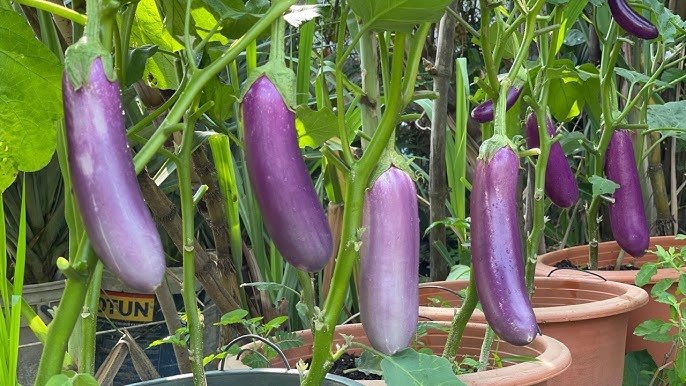
Before diving into the planting methods, here’s why eggplant deserves a place in your home garden:
1. It’s a Hardy, Heat-Loving Plant
Eggplants thrive in warm weather and can tolerate high temperatures better than many vegetables.
2. High Yield from a Single Plant
One healthy plant can produce 15–30 eggplants depending on the variety.
3. Grows Well in Both Pots and Soil
Whether you have space or not, eggplants adapt easily.
4. Long Harvest Season
You can harvest continuously for 3–5 months with proper care.

5. Aesthetic Appeal
Eggplant plants look beautiful with their purple stems, violet flowers, and shiny fruits.
Growing Eggplant in Pots
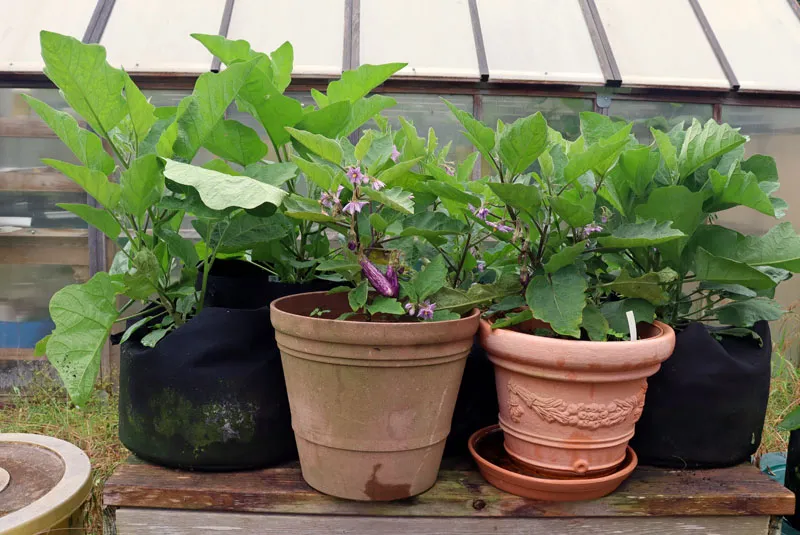
Growing eggplant in containers is ideal for balconies, terraces, or small spaces. Containers allow easy movement, good control over soil quality, and protection from pests.
1. Choosing the Right Pot
Eggplants have deep roots, so choosing the right pot is crucial.
- Minimum depth: 14–16 inches
- Width: 12–14 inches
- Material: Terracotta, plastic, grow bags, or ceramic pots
Grow bags of 20–30 liters work exceptionally well.
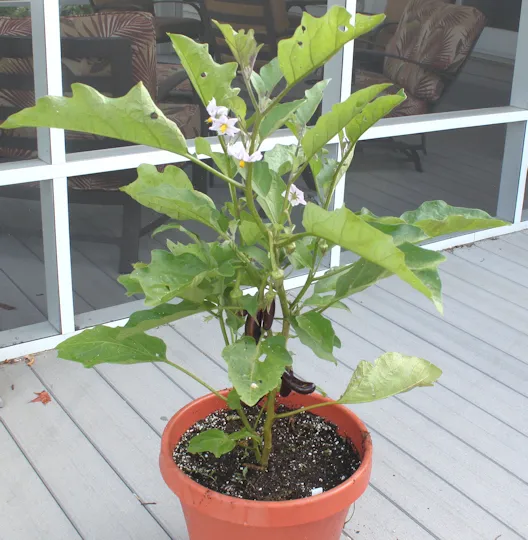
Larger pots support bigger plants and higher yields.
2. Best Soil Mix for Potted Eggplants
Eggplants grow best in loose, well-draining soil.
Recommended Mix:
- 40% garden soil
- 30% compost or cow dung
- 20% cocopeat
- 10% sand or perlite
Add-ons for nutrient boost:
- Handful of neem cake (for pest protection)
- 1 tablespoon bone meal or rock phosphate
Light soil prevents root rot and encourages the plant to grow faster.
3. Planting Eggplants in Pots
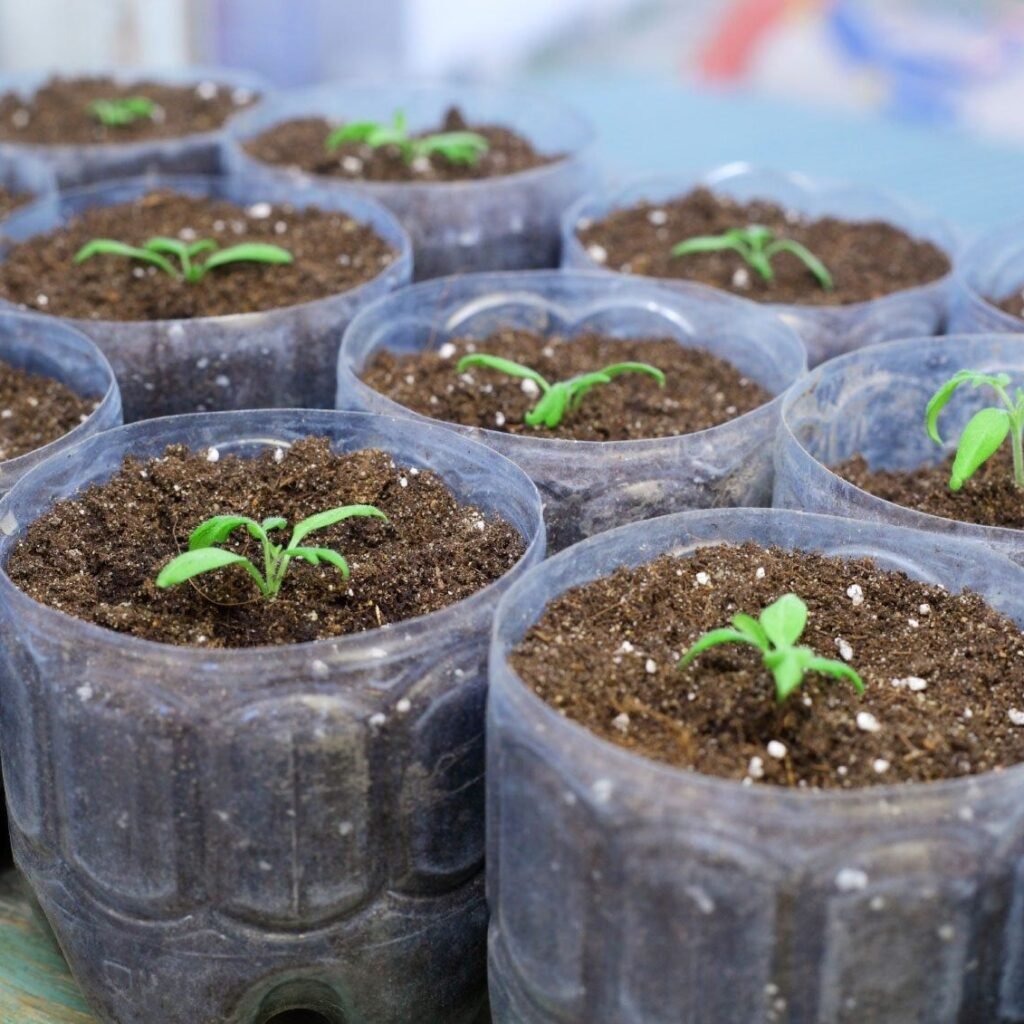
You can start with seeds or seedlings from a nursery.

If Using Seeds:
- Soak seeds for 6–8 hours.
- Sow them in seed trays or small pots.
- Keep in a warm place until germination (7–12 days).
- Transplant when 4–5 inches tall.
If Using Seedlings:
- Buy healthy ones with thick stems and green leaves.
- Plant one seedling per pot for best growth.
Make a hole in the center, place the plant, and gently press soil around it.
4. Sunlight Requirement
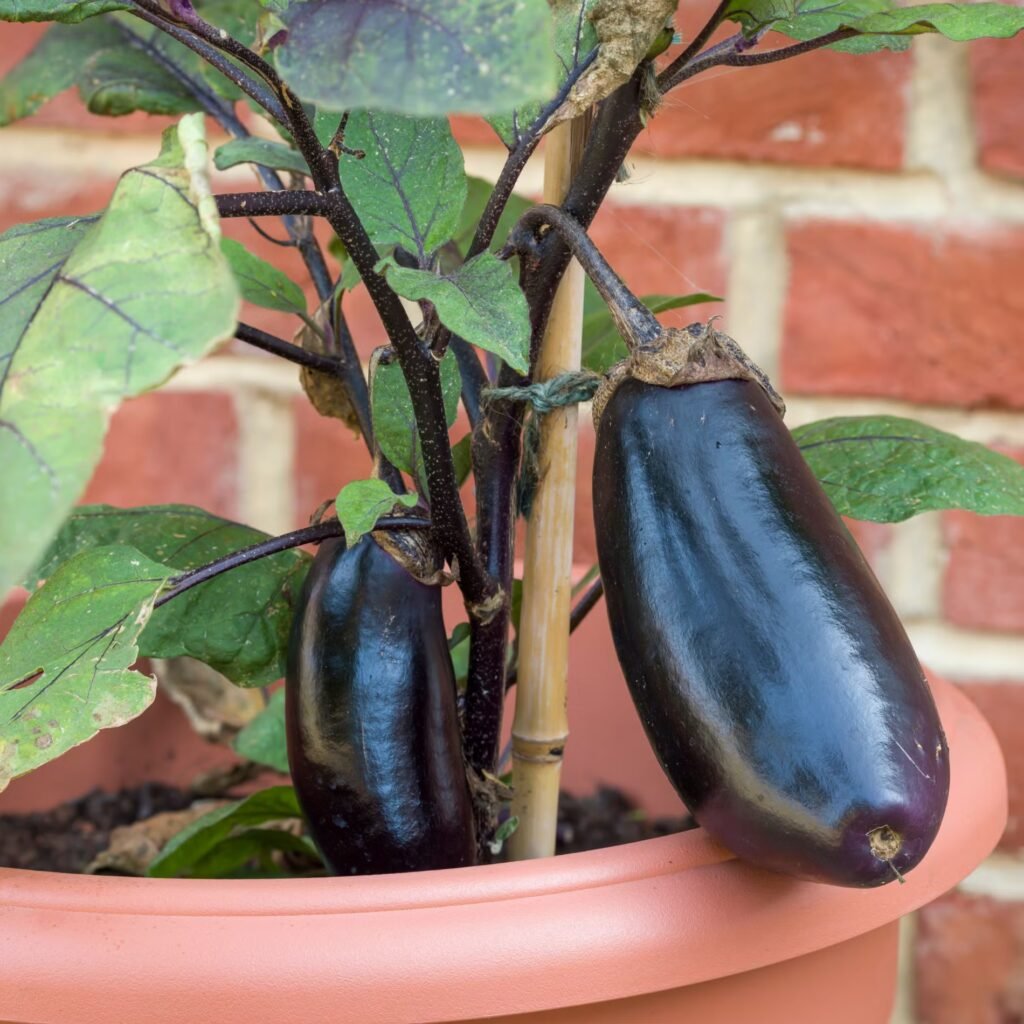
Eggplants need 6–8 hours of direct sunlight daily.
Place the pot where it receives full sun—balcony, terrace, or near a sunny window.
5. Watering Schedule
Eggplants love moisture but hate soggy soil.
Watering Tips:
- Water deeply 3–4 times per week in summer.
- Ensure the top inch of soil is dry before watering again.
- Avoid wetting the leaves to prevent fungal disease.
6. Fertilizing Potted Eggplants
To keep your plant productive:
Every 20 Days Apply:
- Compost or cow dung
- Liquid fertilizers (banana peel tea, compost tea)
- Fish emulsion or seaweed extract (optional)
During flowering and fruiting:
- Add 1 tablespoon bone meal OR potash for bigger fruits.
7. Support for Plants
Eggplants become heavy with fruits.
Insert a bamboo stick or stake to support the main stem and prevent breakage.
8. Common Pests in Pots
Look out for:

- Aphids
- Mealybugs
- Whiteflies
- Spider mites
Natural Remedies:
- Neem oil spray
- Soap water spray
- Garlic or ginger homemade pest repellent
Growing Eggplant Directly in the Garden
If you have backyard or ground space, growing eggplants in soil gives faster growth and larger fruit size.
1. Soil Preparation
Eggplants love rich, fertile, well-draining soil.
Ideal Soil Conditions:
- pH level: 5.5–7.0
- Add 5–6 kg compost per square meter
- Mix in neem cake and some sand for drainage
Loosen the soil at least 12–15 inches deep before planting.
2. Planting in the Garden
Spacing:
- Distance between plants: 18–24 inches
- Distance between rows: 24–30 inches
Create small mounds and plant seedlings at the center.
This improves drainage and root expansion.
3. Watering in Garden Beds
Ground-grown eggplants need more consistent hydration.
Watering Guide:
- Every 2–3 days in summer
- Once a week during cooler months
Mulching around the plant helps retain moisture and keeps weeds away.
4. Sunlight Needs
Choose a spot that receives:
- Full sunlight all day
The more sunlight, the better the flowering and fruiting.
5. Fertilization in Garden Soil
Garden-grown plants respond well to organic fertilizers.

Before Planting:
- Add compost, cow dung, and wood ash.
During Growth:
- Every 20–25 days apply compost.
- Add potassium-rich fertilizers (banana peels, ash).
- Add bone meal at flowering stage.
Healthy nutrition equals bigger, shinier eggplants.
Caring for Eggplant: Tips for Both Pots and Garden
1. Pruning
Remove lower leaves and suckers to allow air circulation.
This helps prevent disease and encourages fruiting.
2. Mulching
Use:
- Dry leaves
- Straw
- Coconut husk pieces
Mulching keeps soil cool and moist.
3. Pollination
Eggplants self-pollinate but gently shaking the plant boosts fruit formation.
4. Disease Prevention
To avoid fungal issues:
- Keep leaves dry
- Ensure airflow
- Never overcrowd plants
Harvesting Your Eggplants
When to Harvest:
- 60–80 days after transplanting
- Fruit should be glossy, firm, and medium size
- Press lightly—if the skin springs back, it’s ready
Do not wait too long, as overripe eggplants turn dull and bitter.

Use scissors or pruning shears to cut the stem—never pull the fruit.
Growing Eggplants: Pots vs Garden (Quick Comparison)
| Feature | Pots | Garden |
|---|---|---|
| Space Needed | Small | Large |
| Growth Speed | Medium | Fast |
| Fruit Size | Medium | Large |
| Watering | Frequent | Moderately frequent |
| Pest Resistance | Higher risk | Moderate risk |
| Soil Control | Excellent | Moderate |
Both methods work beautifully—as long as you follow the right steps.
Final Thoughts
Growing eggplants in pots or directly in the garden is not only easy but incredibly rewarding. With the right soil, sunlight, watering, and nutrition, your plants will thrive and produce delicious, healthy eggplants for months. Whether you’re gardening on a balcony or in a large outdoor plot, eggplants adapt easily and offer generous yields with minimal care.
Start your eggplant-growing journey today, and soon you’ll enjoy fresh, chemical-free harvests straight from your home garden!

Leave A Comment