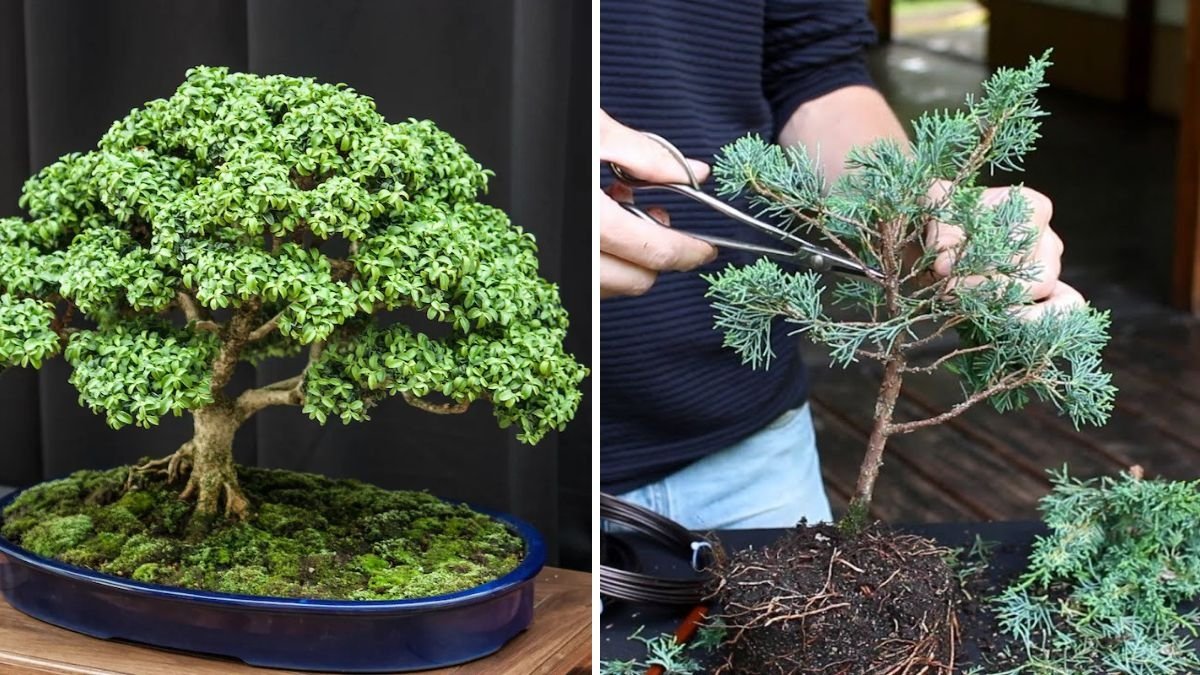
Creating a bonsai may look complicated, but the truth is this ancient art can be surprisingly simple when broken down into easy, beginner-friendly steps. You don’t need expensive tools, special training, or years of gardening experience. With a little guidance and consistency, you can grow your own beautiful bonsai tree right at home—quickly and effortlessly.
In this complete guide, you’ll learn how to choose the right plant, prune it correctly, shape it with ease, pot it properly, and care for it year-round. Whether you’re a beginner or someone who has never touched a plant before, this guide is designed to help you succeed.
What Exactly Is a Bonsai?
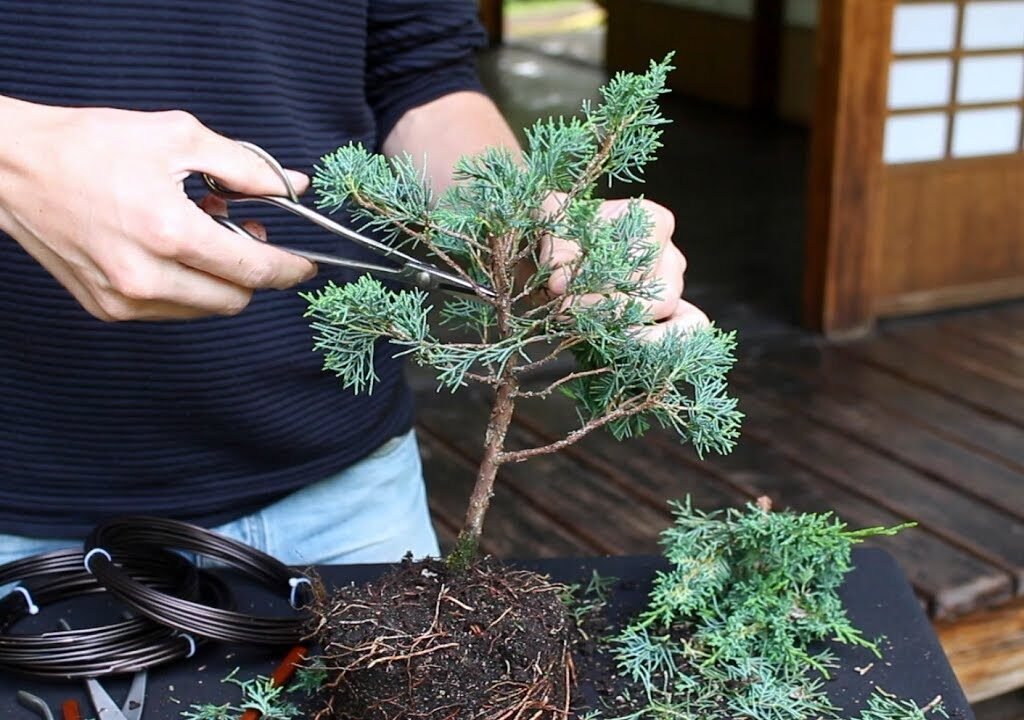
A bonsai is a regular plant grown in a small container and trained to look like a miniature tree. Contrary to popular belief, bonsai is NOT a special species—it’s a technique. Almost any plant can be turned into a bonsai with proper pruning, shaping, and care.
The beauty of bonsai lies in its simplicity:
Small plant. Smart pruning. Stunning result.
Step 1: Choose the Right Plant (Beginner-Friendly Options)
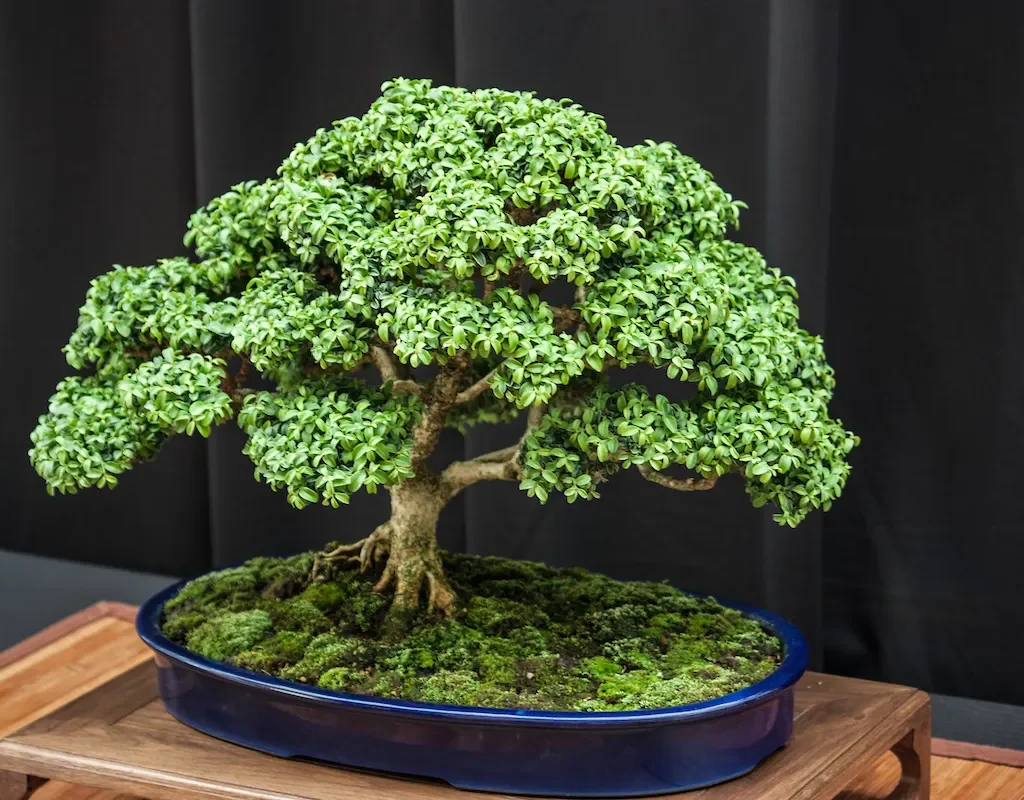
If you want to create a bonsai fast and easy, choose plants that grow quickly and respond well to pruning. Here are the best beginner options:
Ficus (Most Recommended)
- Flexible branches
- Grows fast
- Very forgiving
Jade Plant
- Perfect for indoor bonsai
- Thick trunk develops quickly
Chinese Elm
- Beautiful branching
- Classic bonsai look
Bougainvillea
- Fast-growing
- Produces colorful flowers
Juniper
- Great for outdoors
- Ideal for shaping
If you already have a potted plant at home, you can even convert that into a bonsai!
Step 2: Choose the Perfect Pot
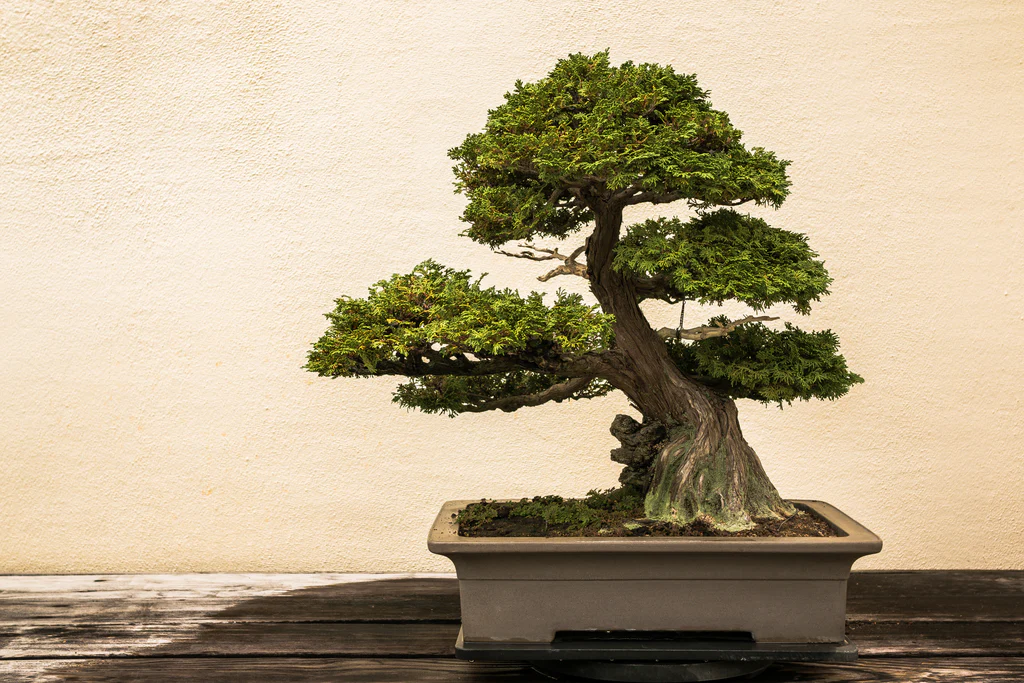
A bonsai pot is usually:
- Wide and shallow
- Has a good drainage hole
- Made of ceramic or clay
But if you’re a beginner, any small, shallow pot with a drainage hole will work. Don’t overthink it—bonsai is about creativity.

Pot Size Tip:
Choose a pot roughly one-third the height of your plant.
Step 3: Prepare the Soil (Fast & Easy Mix)
Bonsai soil must drain quickly so roots don’t rot. You can make a simple mix at home:
DIY Fast-Drain Soil Mix
- 50% garden soil
- 30% sand
- 20% compost or cocopeat
Mix well.
This gives the perfect balance of drainage + nutrients.
Step 4: Pruning – The Secret to Bonsai Creation
Pruning is where the magic happens. It helps shape the plant and controls its size.
There are two types of pruning you must learn:
1. Structural Pruning (Shaping the Main Look)
Do this once when you start.
Steps:
- Remove weak, dead, and crossing branches.
- Choose one strong central trunk (main stem).
- Trim side branches to make a triangular or dome shape.
- Keep the bottom branches longer and top branches shorter—this gives a natural tree shape.
Go slow and remove small amounts at a time.

2. Maintenance Pruning (To Keep It Mini)
Do this every 2–4 weeks.
- Pinch new shoots with fingers
- Keep trimming branches that grow too long
- Always maintain a balanced shape
This keeps the bonsai neat and compact.
Step 5: Wiring – Shape Your Bonsai Easily
Wiring is used to bend and shape branches. You can use:
Aluminum wire
Copper wire
(Aluminum is easier for beginners.)
How to Wire a Branch
- Wrap the wire gently around the branch (not too tight).
- Bend it slowly into the direction you want.
- Leave it for 3–6 weeks until the shape sets.
Do not leave the wire too long or it may leave marks on the branch.
Step 6: Repotting – Helps Your Bonsai Grow Faster
Repotting is important because it:
- Removes old soil
- Prevents root-bound stress
- Encourages new growth
When to Repot:
- Young plants: every 1–2 years
- Older bonsais: every 3–4 years
How to Repot Easily:
- Gently remove the plant from its old pot.
- Trim 20–30% of the long roots.
- Add fresh soil to the new pot.
- Position the plant slightly off-center (bonsai aesthetic).
- Press soil firmly and water well.
Step 7: Watering – The Most Important Part
Bonsai trees need careful watering.
Simple Rule:
Water when the top soil feels slightly dry.

Don’t overwater.
Don’t underwater.
Keep it consistent.
Best method:
- Pour water slowly
- Let it drain completely
- Water again after a minute (double watering method)
This ensures roots are fully hydrated.
Step 8: Sunlight Requirements
Most bonsais need bright, indirect sunlight for 4–6 hours daily.
Ideal Places:
- Balcony
- Terrace
- Windowsill
- Near bright indoor windows
Avoid:
- Harsh afternoon sun
- Total shade
- Closed dark rooms
Step 9: Fertilizing (For Fast Growth)
Use a mild fertilizer every 30–40 days.
Best Options:
- Seaweed extract
- Liquid NPK (very mild)
- Compost tea
- Vermicompost (small amounts)
Do not over-fertilize—bonsai roots are delicate.
Step 10: Styling Ideas for Your Bonsai
Here are the most popular and easy styles:
Formal Upright
Straight trunk, balanced branches.
Informal Upright
Natural curve in the trunk.

Slanting Style
Tree grows at a 60° angle.
Cascade Style
Branches flow downward like a waterfall.
Broom Style
Round shape with many branches.
Start with Formal Upright—the easiest for beginners.
Common Mistakes Beginners Should Avoid
Overwatering
Using a deep pot
Cutting too many branches at once
Keeping the plant in low light
Using heavy garden soil without drainage
Leaving wires too long
Avoid these, and you’ll succeed much faster!
How Long Does It Take to Make a Bonsai?
Good news:
You can create a basic bonsai shape in just 1–2 hours.
But the plant matures and becomes more beautiful over time.
With regular trimming and patience, your bonsai will look better each month.

Benefits of Making Your Own Bonsai
Reduces stress and anxiety
Boosts creativity
Makes your home look beautiful
Great hobby for kids and adults
Brings nature indoors
Easy to maintain once shaped
Final Thoughts: Create Your Bonsai Today!
Turning a normal plant into a bonsai is not just gardening—it’s an art and meditation. With the simple steps above, anyone can create a stunning bonsai at home easily and quickly. You don’t need expensive materials or advanced skills. All you need is curiosity, patience, and a love for nature.
Start today, shape your first bonsai, and enjoy watching your miniature tree grow into a masterpiece over time.

Leave A Comment