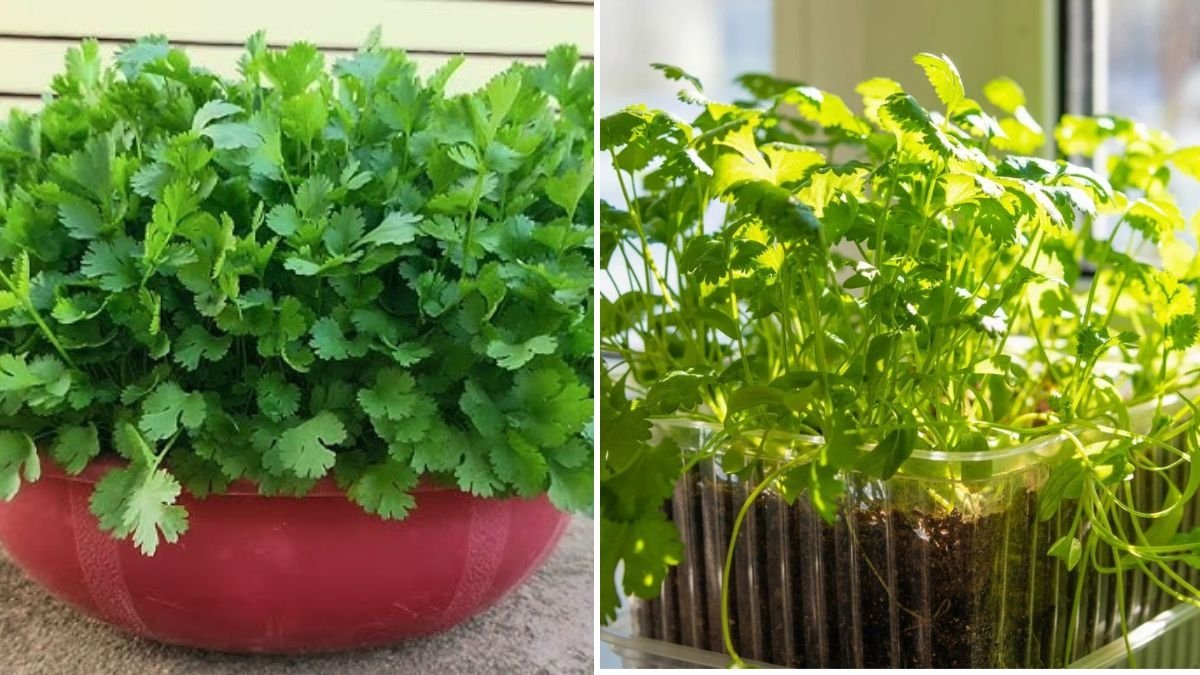
Growing coriander indoors without direct sunlight may seem challenging, but it’s absolutely possible with the right techniques. Coriander—also known as cilantro or dhania—is one of the most popular herbs used in Indian, Asian, and Middle Eastern cooking. The good news? You can grow it successfully inside your home, even if your windows don’t get strong sun.
Indoor coriander grows well under low-light conditions when supported with proper soil, watering, placement, and, if needed, artificial lighting. This guide will teach you everything—from choosing the right variety to harvesting your coriander indoors all year long.
Why Growing Coriander Indoors Is a Great Idea
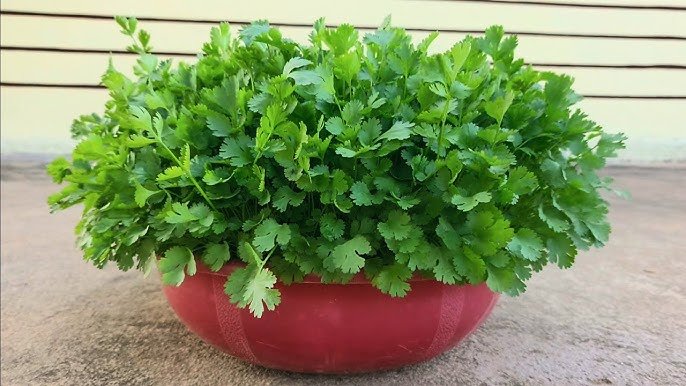
Coriander is usually grown outdoors because it loves sunlight and space. But indoor growing has several advantages:
1. Easier Pest Control
Common issues like aphids, caterpillars, and leaf miners rarely appear indoors.
2. Fresh Leaves Anytime
No need to run to the market when you want fresh dhania for chutneys or garnishing.
3. Space-Friendly
You can grow coriander in small pots on kitchen windowsills, shelves, or tabletops.
4. Year-Round Growing
Rain, heatwaves, and cold weather won’t affect your indoor coriander garden.
Understanding Coriander’s Light Needs
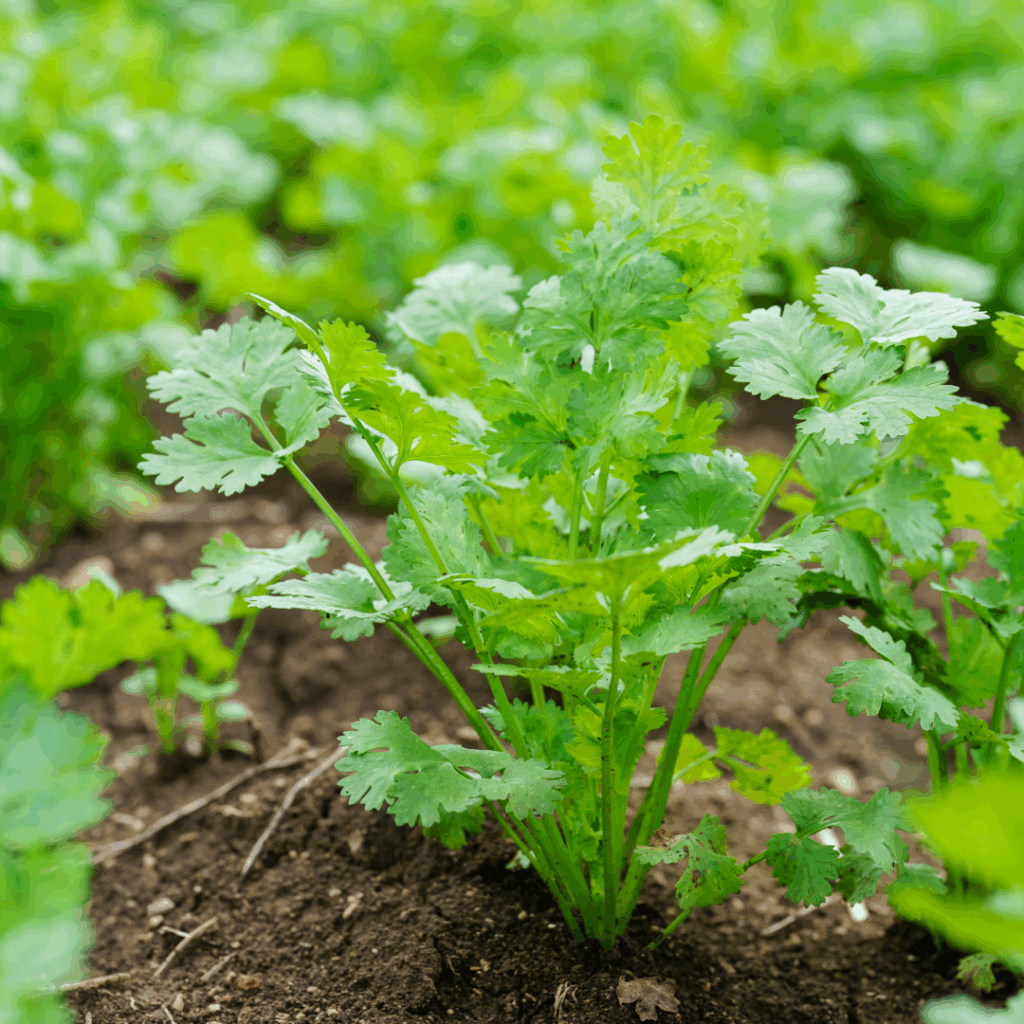
Coriander is considered a low-light-tolerant herb compared to basil or rosemary. It will grow indoors without direct sunlight as long as it receives bright indirect light for several hours a day.
How Much Light Coriander Needs Indoors
- Ideal: 4–6 hours of bright indirect light
- Minimum: 2–3 hours of low, filtered light
- Optional: Supplemental grow lights if your space is too dark
Even rooms without windows can support coriander if you use an artificial light source.

Best Coriander Varieties for Indoor Growing
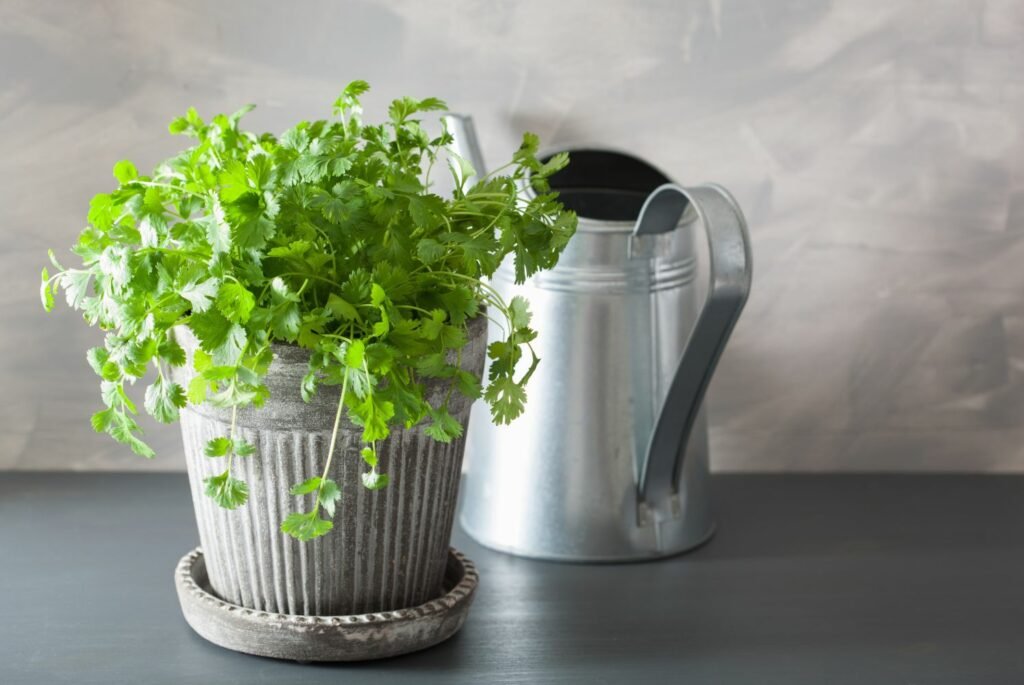
Choosing the right variety is key when growing without direct sunlight.
Recommended Indoor Varieties
- Calypso Coriander – Slow-bolting and tolerant of low light.
- Leisure Coriander – Strong, fragrant leaves suitable for indoor growth.
- Confetti Coriander – Delicate leaves, grows well in partial shade.
- Dhaniya (Indian Heirloom variety) – Adapts well to indoor humidity and temperatures.
Avoid varieties known for early bolting, as indoor low light can trigger premature flowering.
Choosing the Right Container
Coriander has long taproots, so shallow pots won’t work.
Container Requirements
- Depth: Minimum 8–10 inches
- Width: At least 12 inches if you want bushy growth
- Material: Plastic, ceramic, terracotta, or grow bags
- Drainage: Essential! Coriander hates soggy soil
If you want a continuous supply, consider using long rectangular planters.
Ideal Soil Mix for Indoor Coriander
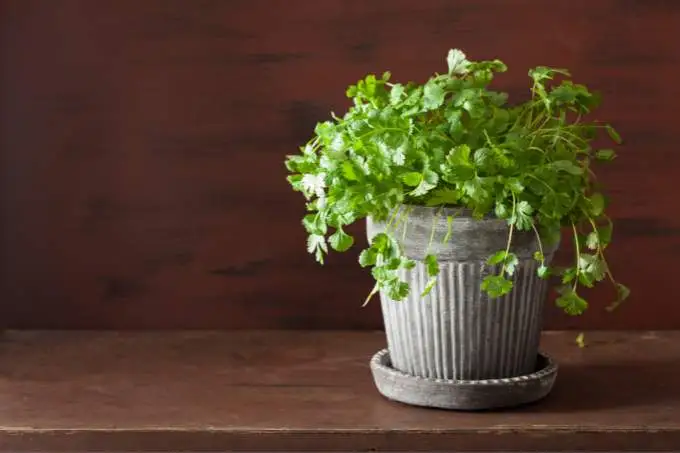
Coriander thrives in loose, well-draining soil that retains some moisture but doesn’t become heavy.
Best Soil Mix
- 40% coco peat or peat moss
- 30% compost
- 20% garden soil
- 10% perlite or coarse sand
Soil pH:
Coriander prefers slightly acidic to neutral soil (pH 6.5–7.5).
Avoid clay-like or compact soils, as they block air circulation around the roots.
How to Plant Coriander Indoors (Step-by-Step)
Coriander is most successful when grown directly from seeds indoors rather than transplanted.
Step 1: Prepare the Seeds
Coriander seeds are actually two seeds stuck together. Lightly crush them to split into halves. This boosts germination.

Step 2: Sow the Seeds
- Scatter seeds evenly over the soil surface.
- Cover with ¼ inch of soil.
- Water gently using a spray bottle.
Step 3: Maintain Moisture
Keep the soil evenly moist (not wet). Coriander needs moisture for germination.
Step 4: Provide Indirect Light
Place the pot near a bright window or under an LED light source.
Germination Time
Coriander seeds germinate in 7–14 days, depending on temperature.
How to Grow Coriander Indoors Without Direct Sunlight
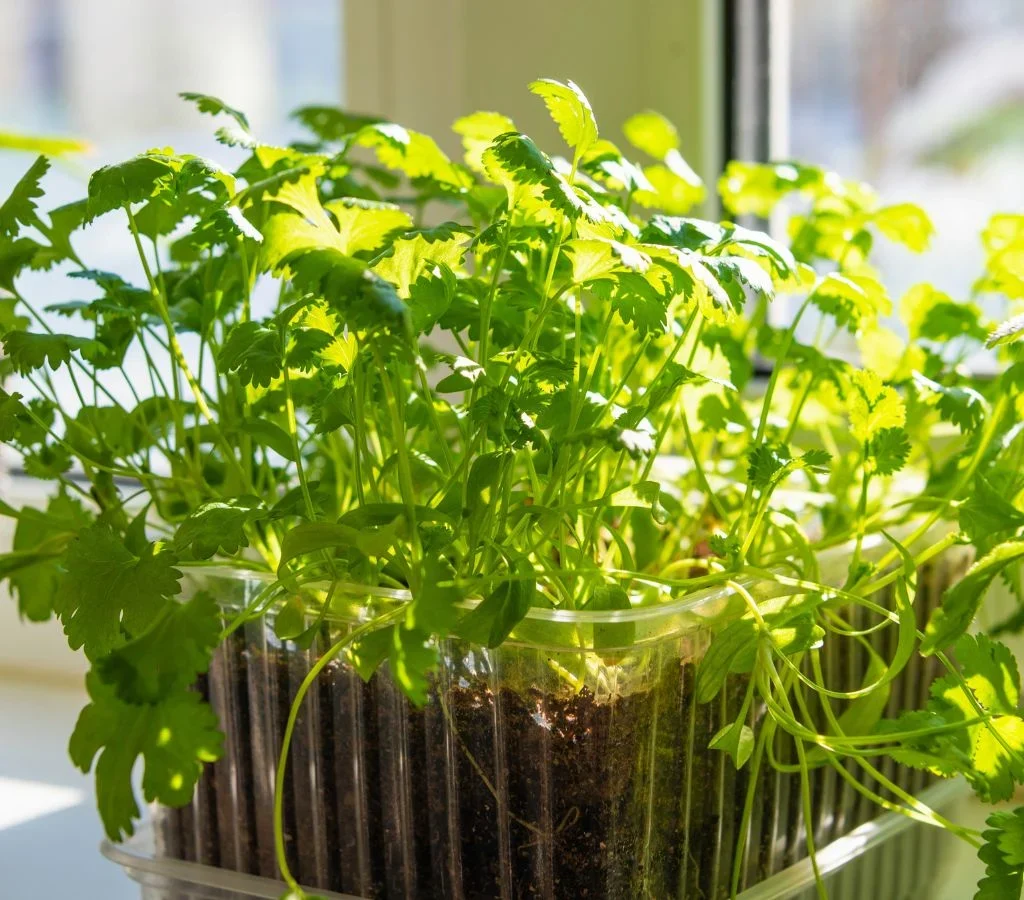
Even if your home gets very little natural light, coriander can still thrive. Here’s how:
1. Use Bright Indirect Light Sources
If your room has windows but no direct sunlight, you’re in luck. Place your pots:
- Near a north-facing window
- 1–2 feet away from east or west windows
- Behind light curtains that diffuse sunlight
Avoid south-facing areas unless the sun is very weak.
2. Use Artificial Light (Grow Light Alternative)
If your space receives almost no sunlight—like a kitchen corner—use affordable LED lights.
Best Light Type
- Cool white LED bulbs
- Tube lights
- Grow lights (optional)
Light Duration
- 8–12 hours daily
Keep the light 6–8 inches above the plant for best results.
Good news: You don’t need expensive grow lights. Regular LEDs also work because coriander is low-light tolerant.
3. Maintain Proper Indoor Temperature
Coriander grows best in cool conditions.
Ideal Indoor Temperature
- 18°C–26°C (65°F–78°F)
Avoid placing your coriander near:
- Gas stoves
- Ovens
- Heaters
- Direct heat from appliances
Heat causes the plant to bolt (flower), which reduces leaf production.
4. Water Carefully (Most Important Step Indoors)
Indoor plants dry slowly because there’s less airflow. Overwatering is the number one cause of coriander failure indoors.
Watering Tips
- Water only when the top inch feels dry.
- Use a spray bottle for young seedlings.
- Ensure water drains out completely.
- Never let water sit in the tray beneath the pot.
Signs of Overwatering
- Yellow leaves
- Wilting
- Bad smell from soil
Let soil dry slightly between waterings.
5. Feed Coriander With Light Fertilizers
Coriander does not need heavy feeding indoors. Too much fertilizer can make leaves bitter.
Use Light, Organic Fertilizers
- Vermicompost (small handful every 2 weeks)
- Seaweed solution (every 15 days)
- Compost tea (once a month)
Avoid chemical fertilizers, especially nitrogen-heavy ones, as they weaken the plant indoors.
6. Promote Airflow
Because coriander grows best in cooler environments, air circulation is important.
Ways to Improve Airflow Indoors
- Place plants near windows that open
- Use a small fan on low setting (not directly at the plant)
- Avoid overcrowding multiple pots in one area
Good airflow prevents fungal diseases and damping-off in seedlings.

Preventing Coriander from Bolting Indoors
Bolting is when coriander starts producing flowers instead of leaves. Indoors, low sunlight and heat can trigger this.
How to Prevent Bolting
- Keep plants cool
- Harvest regularly
- Use slow-bolting seeds
- Give at least 4 hours of indirect light daily
- Water properly—not too much, not too little
If a plant bolts, it will stop leaf production. Remove flowering stems early to slow the process.
How to Harvest Indoor Coriander for Continuous Growth
Harvesting correctly ensures your plant keeps producing leaves for weeks.
Best Harvesting Technique
- Wait until the plant is 6 inches tall.
- Snip outer leaves first.
- Leave the center stem to allow regrowth.
- Never harvest more than one-third of the plant at a time.
Frequent trimming encourages bushier growth.
Common Problems When Growing Coriander Indoors
Here’s what you may encounter and how to solve them:
1. Yellowing Leaves
Cause: Overwatering or poor drainage
Solution: Reduce watering, improve airflow
2. Leggy Stems
Cause: Insufficient light
Solution: Move closer to a window or use LED lighting
3. Slow Growth
Cause: Poor soil or low temperature
Solution: Add compost and keep temperature above 18°C
4. Wilting
Cause: Underwatering or root rot
Solution: Check soil moisture and drainage

Top Tips to Successfully Grow Coriander Indoors Without Sunlight
- Choose slow-bolting varieties.
- Use deep pots for strong taproot growth.
- Place your plant where bright indirect light is available.
- Supplement with LED lighting if needed.
- Water only when the topsoil feels dry.
- Keep plants cool, especially in the kitchen.
- Harvest frequently to encourage new growth.
By following these tips, you can enjoy fresh coriander leaves for months—even if you live in an apartment with no direct sunlight.
Final Thoughts
Growing coriander indoors without direct sunlight is completely achievable with simple adjustments in lighting, watering, and placement. Whether your home has shaded windows or limited natural light, coriander adapts remarkably well indoors when provided with the right conditions.
With just a pot, good soil, indirect light (or a basic LED bulb), and regular care, you’ll have a steady supply of fresh coriander for garnishing, cooking, and enjoying all year long.

Leave A Comment