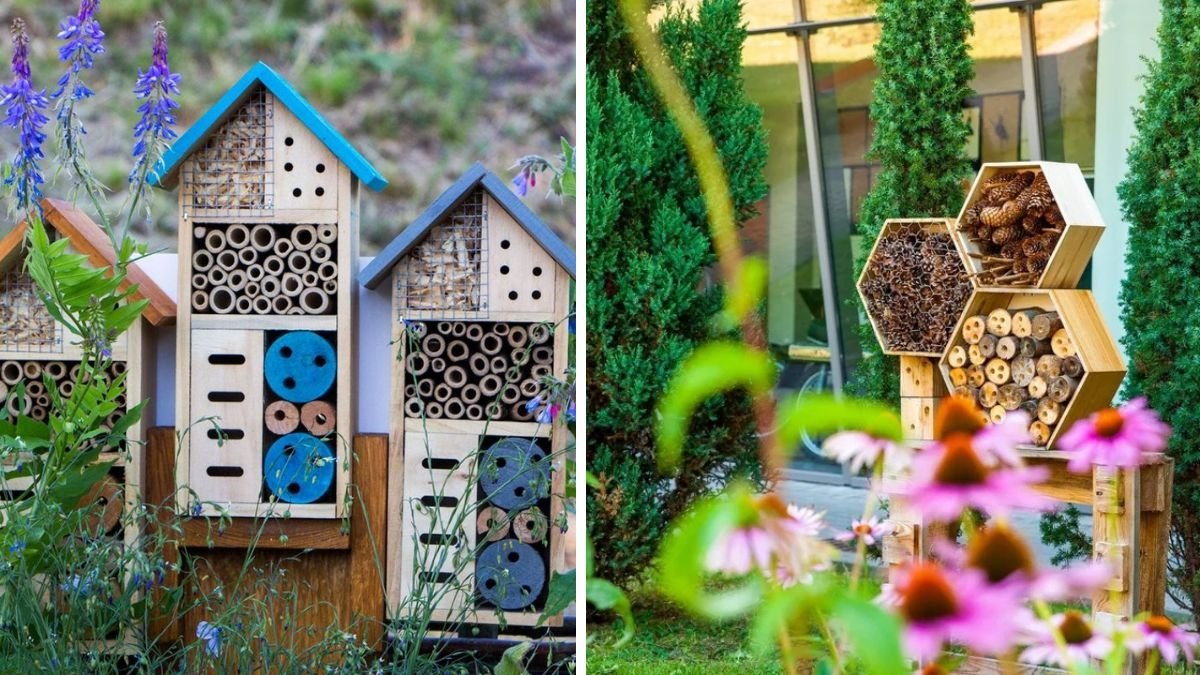
One of the easiest and most rewarding ways to support a thriving garden ecosystem is to attract beneficial insects. These tiny helpers—like ladybugs, lacewings, solitary bees, predatory beetles, and hoverflies—play a major role in pollination and natural pest control. But as urbanization increases and natural habitats disappear, these helpful creatures often struggle to find safe places to live, breed, and overwinter.
That’s where DIY insect hotels come in.
An insect hotel (also called a bug house or insect habitat) is a handmade structure filled with natural materials that provide shelter for beneficial bugs. These compact sanctuaries invite good insects to your garden, helping reduce harmful pests and increase pollination—without needing pesticides.
In this comprehensive guide, you’ll learn why insect hotels are so effective, which insects they attract, what materials to use, and simple step-by-step instructions to build one yourself, even with minimal tools. Whether you’re an urban gardener, backyard grower, or nature lover, this project is fun, sustainable, and incredibly beneficial to your garden.
Why Build an Insect Hotel?
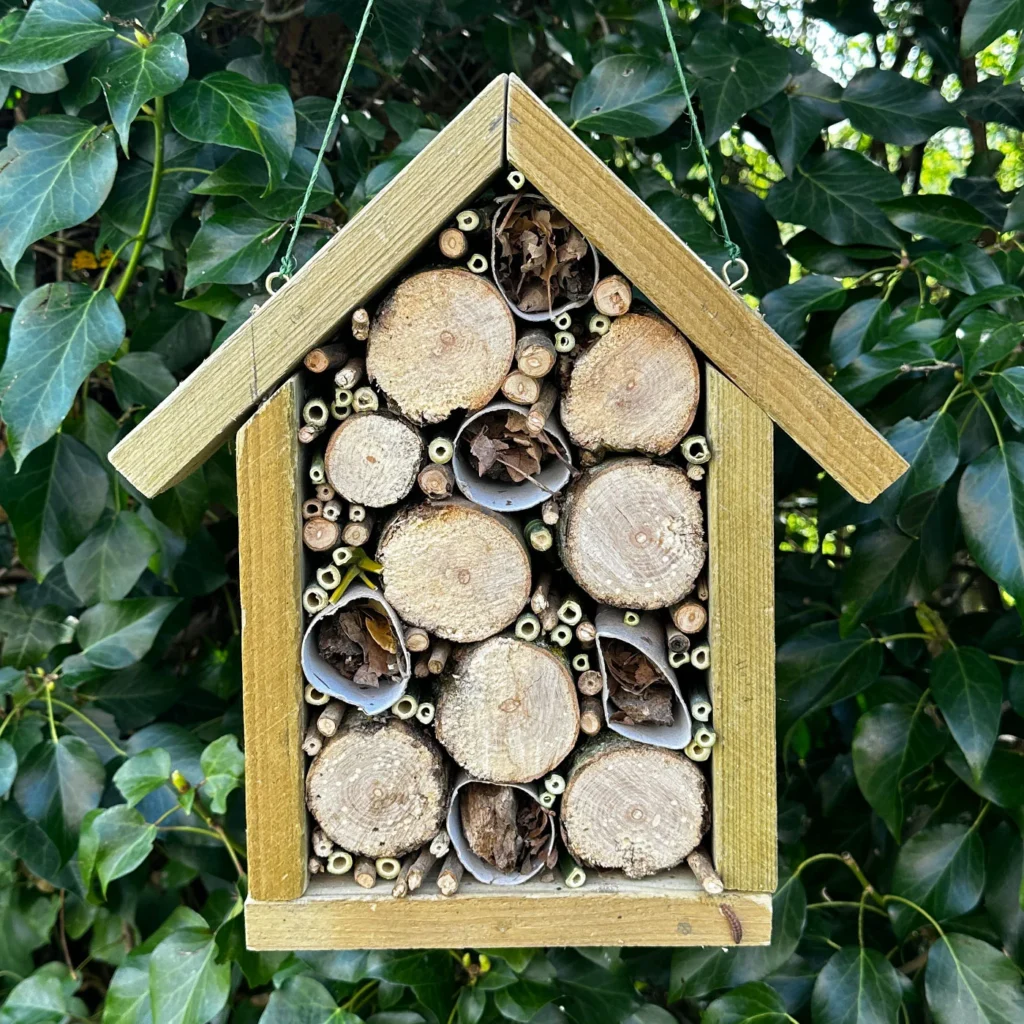
Before we get into the building process, it’s important to understand why insect hotels are so valuable.
Boost Pollination
Solitary bees (such as Mason and Leafcutter bees) pollinate far more efficiently than honeybees. Giving them a home near your garden ensures better fruit, vegetables, and flowers.
Improve Natural Pest Control
Certain insects—like ladybugs, lacewings, predatory beetles, and parasitic wasps—feed on pests such as aphids, mites, and caterpillars. Providing shelter increases their population.
Support Biodiversity
An insect hotel mimics nature and helps restore habitat lost to concrete, pesticides, and urban expansion.

Help Insects Survive Winter
Many beneficial bugs overwinter in hollow stems, leaves, and bark—materials often removed during modern gardening cleanup.
Educational and Fun
It’s a great family project, especially for kids learning about the ecosystem.
What Kind of Insects Will Your Hotel Attract?
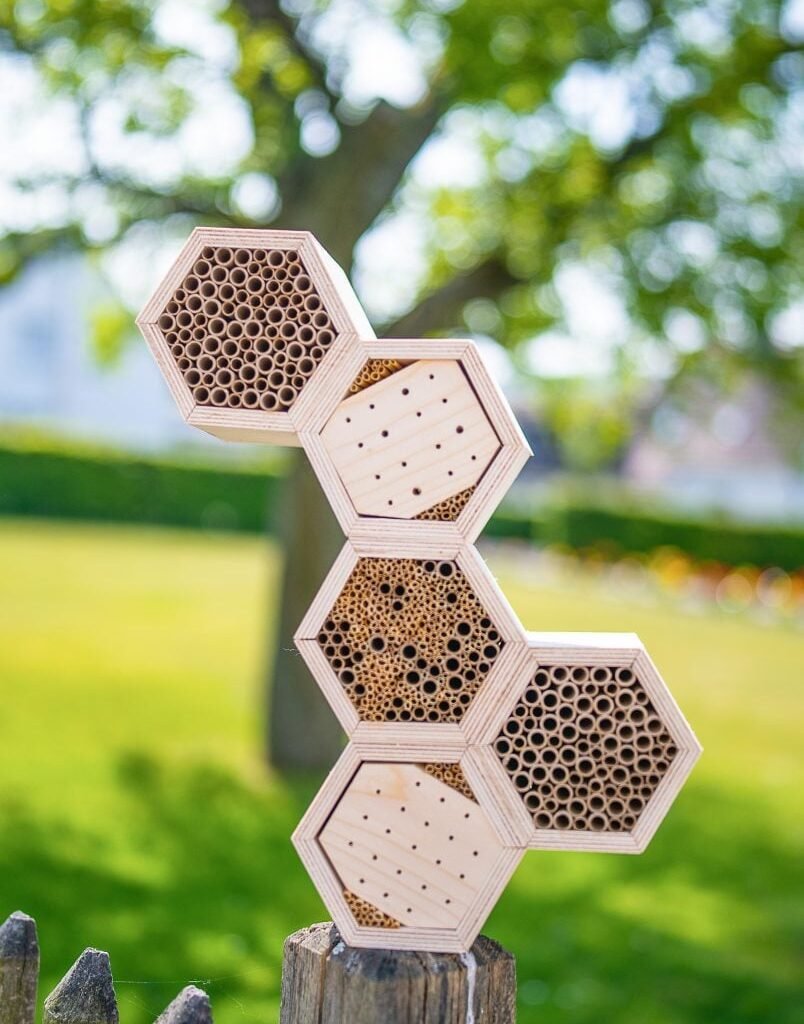
Different materials attract different insects. A variety of textures and spaces will encourage a diverse mix of beneficial species.
Solitary Bees
- Mason bees, leafcutter bees
- They use hollow tubes and drilled holes
- Excellent pollinators
Ladybugs
- Eat aphids, mites, and scale insects
- Love dry leaves, bark, and pinecones
Spiders
- Control flies, moths, mosquitoes
- Prefer dark, narrow crevices
Lacewings
- Larvae eat aphids and whiteflies
- Attracted to straw and rolled cardboard
Predatory Beetles
- Eat snails, slugs, and larvae
- Prefer logs, soil pockets, and bark
Earwigs (Helpful Ones!)
- Eat aphids and caterpillars
- Like bamboo and rolled tubes
A well-designed insect hotel becomes a bustling miniature ecosystem.
Best Natural Materials to Use in an Insect Hotel
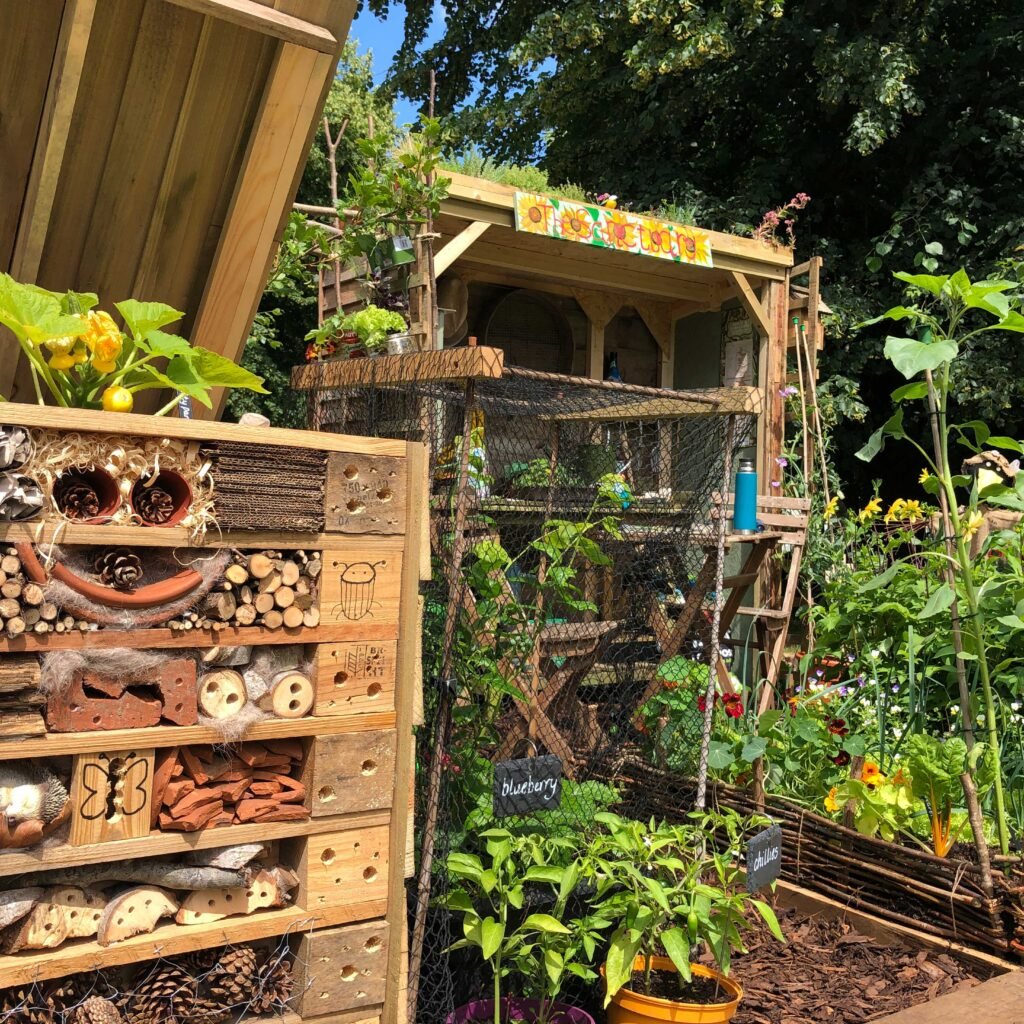
The key to building an effective insect hotel is to use natural, untreated materials that mimic the insects’ natural habitats.
Recommended Materials:
- Bamboo sticks or hollow stems
- Wooden logs with drilled holes
- Pinecones
- Bark pieces
- Straw and hay
- Twigs and sticks
- Coconut husk fibers
- Rolled corrugated cardboard
- Dry leaves
- Clay or mud bricks
- Cork pieces
Avoid:
- Treated wood
- Painted or varnished materials
- Plastics (they trap moisture and mold)
- Sharp edges
The more variety you use, the more insects your hotel will attract.
How to Build a DIY Insect Hotel (Step-by-Step)
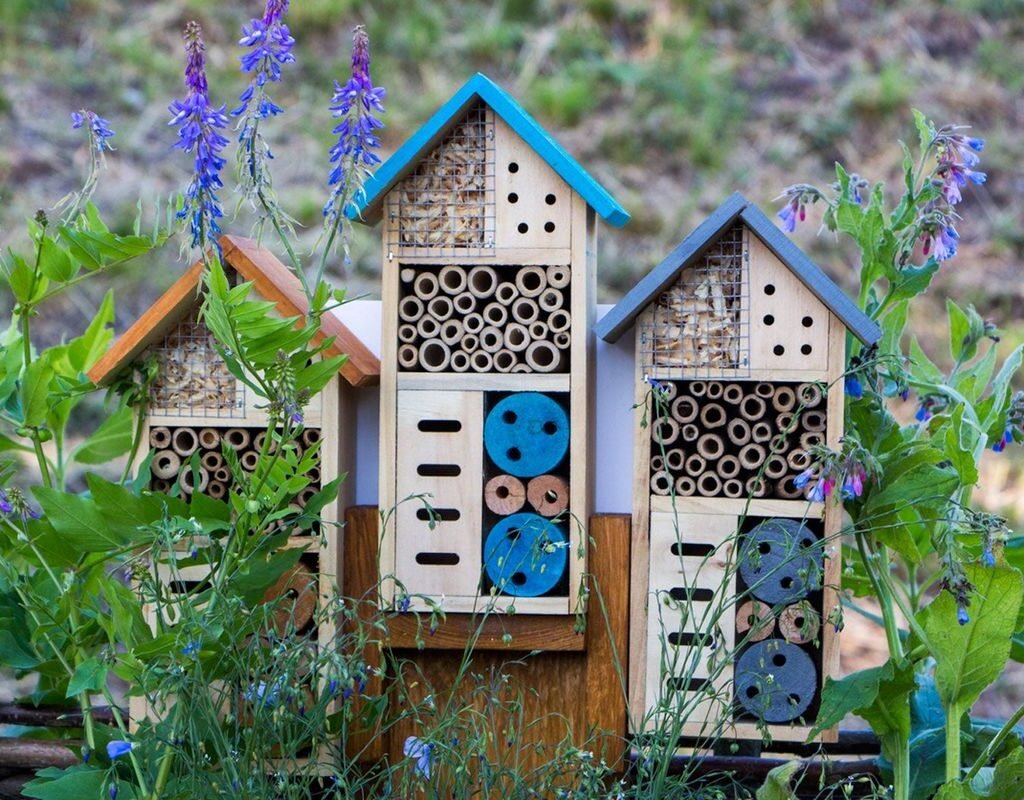
Here is a simple and effective way to create a sturdy insect hotel using inexpensive materials. You don’t need advanced carpentry skills—just a few tools and creativity.
Step 1: Choose a Frame
You can use:

- A wooden box
- Old drawer
- Wine crate
- Birdhouse frame
- Pallet wood assembled into a rectangular box
Aim for a depth of 6–12 inches and an open front. The back should be solid to keep wind and rain out.
Step 2: Divide the Frame into Sections
Add horizontal and vertical dividers inside the frame using scrap wood.
This:
- Keeps materials organized
- Helps different insects use separate chambers
- Makes the hotel more attractive and functional
Create at least 4–6 compartments of varying sizes.
Step 3: Fill Each Section with Different Materials
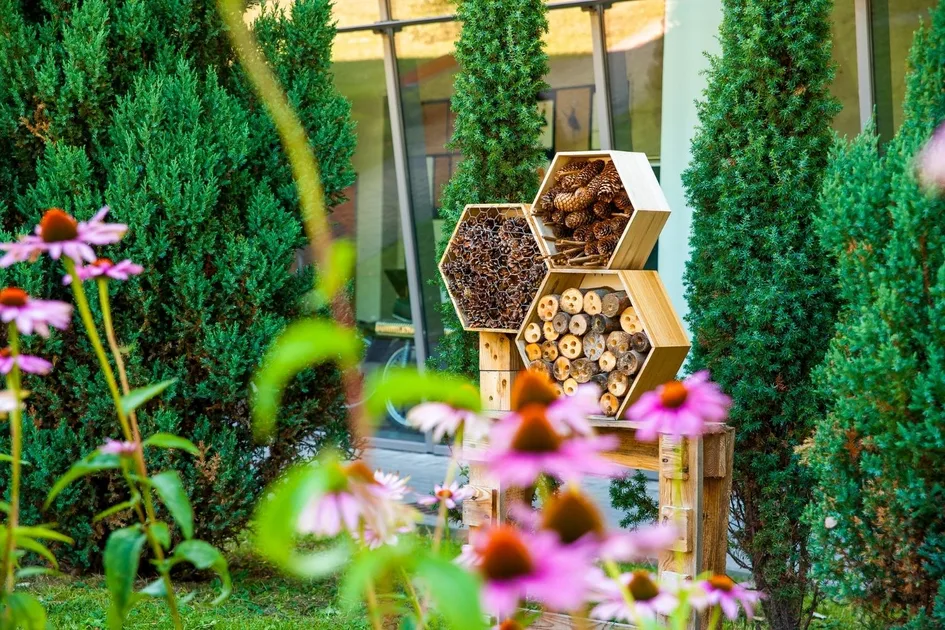
This is where the magic happens! Fill each compartment with insect-friendly materials.
For Solitary Bees
- Bamboo or hollow stems
- Drilled logs (holes 3–8 mm wide, 5 inches deep, smooth inside)
- Paper tubes
For Ladybugs
- Pinecones
- Bark chips
- Dry leaves
For Lacewings
- Rolled cardboard
- Straw
- Coconut fibers
For Beetles and Spiders
- Logs
- Thick branches
- Stabilized soil pockets
Pack materials tightly so they do not move or fall out.
Step 4: Add a Roof (Optional but Recommended)
A slanted roof protects your insect hotel from:
- Rain
- Snow
- Harsh sun
Use a simple wooden plank or leftover shingles. Allow it to overhang slightly to prevent water from entering.
Step 5: Secure Everything Firmly
Use twine or small nails to secure materials so they don’t fall out during wind or rain.

Step 6: Mount the Insect Hotel in a Proper Location
Placement is critical to success.
Ideal Location:
- South or southeast-facing (morning sunlight)
- At least 3–6 feet off the ground
- Near flowers, herbs, and vegetables
- Sheltered from heavy rain and strong winds
Avoid placing the hotel on the ground—this attracts moisture and pests like ants.
Plants to Grow Near Your Insect Hotel
To keep beneficial insects visiting, grow these around the area:
For Bees:
- Lavender
- Mint
- Basil
- Sunflowers
- Coneflowers
- Wildflowers
For Ladybugs & Lacewings:
- Dill
- Fennel
- Alyssum
- Marigolds
- Yarrow
For Beetles & Spiders:
- Native grasses
- Shrubs
- Groundcovers
The more nectar, pollen, and habitat plants in the area, the more successful your insect hotel will be.
Maintenance: How to Keep Your Insect Hotel Safe and Effective
Insect hotels don’t require much work, but a little seasonal maintenance keeps them productive.
1. Check for Mold or Rot
Remove wet or moldy materials immediately.
2. Replace Old Tubes
Bee tubes should be replaced every year to prevent parasites.
3. Clean Out Debris
Insects leave behind shells, mud, and waste—clear the chambers gently.

4. Refresh Materials in Spring
Add new bamboo, straw, and cardboard at the start of the season.
5. Avoid Overcleaning
Some insects overwinter inside—do not disturb during winter months.
Additional Tips for a Highly Successful Insect Hotel
Use Native Materials
Local insects prefer natural materials from their environment.
Create Multiple Hotels
Place smaller insect hotels around the garden to distribute insect populations.
Add a Water Source
A shallow dish with stones gives insects a safe drinking spot.
Provide Food Sources
Plant herbs, flowers, and vegetable crops nearby.
Avoid Pesticides Completely
Even natural sprays can harm beneficial insects.
An insect hotel works best in a truly chemical-free garden.

Final Thoughts: Build a Home That Helps Nature Thrive
Building a DIY insect hotel is one of the most rewarding projects for any gardener. Not only does it attract beneficial insects that protect and pollinate your plants, but it also brings life, diversity, and balance back to your garden.
By combining natural materials, smart placement, and supportive planting, your insect hotel will become a thriving habitat buzzing with helpful visitors.
Whether you’re trying to boost your vegetable yields, reduce pest problems, support pollinators, or simply reconnect with nature, an insect hotel is the perfect eco-friendly solution.
If you’d like, I can also create an SEO meta description, Pinterest pin text, or social media caption for this article!

Leave A Comment